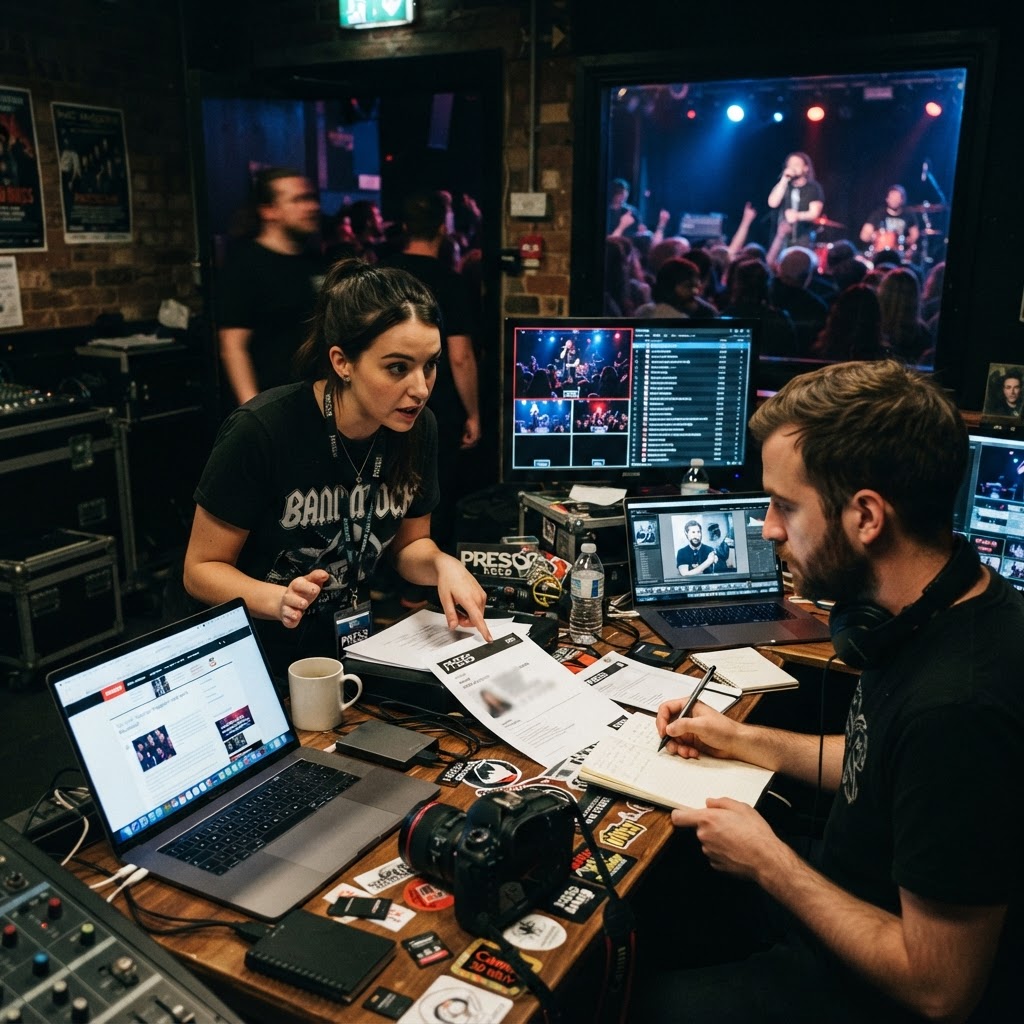
The 7 Best Music PR Tools for Independent Artists: A 2025 Data-Driven Guide
You have spent months on a track, mastered it to professional standards, and uploaded it to your distributor—only to hear absolute silence when you email blogs and playlisters. This is the exact pain point that leads musicians to search for the best music PR tools for independent artists. You are not failing because the music is bad; you are failing because your workflow is manual, unoptimized, and blind to the mechanics of modern digital PR.
The Definitive Answer: The best music PR tools for independent artists are platforms that combine automated contact sourcing, relationship management, and pitch performance tracking. Instead of cold-emailing journalists randomly, use tools that provide verified contact information, current editorial beats, and success-rate analytics, allowing you to secure placements, build sustainable media relationships, and scale your brand awareness without needing a full-time publicist.
Understanding Why Your Pitches Get Ignored: The Algorithm of PR
The music industry is currently facing a 400% increase in daily submissions to major outlets. When you send a generic 'check out my new single' email, it is treated as spam by both email filters and human editors. To reach the threshold of a 'human review,' your pitch must have a subject line click-through rate (CTR) of at least 12% and a specific hook that mirrors the outlet’s recent editorial coverage. Using the best music PR tools for independent artists means moving away from mass-blasting and toward precision-targeted outreach. Modern editors are inundated; they do not look for talent, they look for *validated momentum*.
How do I know which journalists to target for my specific genre?
Success starts with segmenting. Do not target the top 50 music blogs immediately. Instead, target 'micro-curators'—bloggers who focus on your specific micro-genre. Aim for a 5-8% response rate by tailoring your pitch to their last three published articles. When you use an integrated ecosystem like SongBiz, you can pitch to vetted PR outlets directly through a dashboard, removing the guesswork of finding active, high-intent journalist emails.
Insider Truth: Journalists never care about your biography or your 'journey.' They care about your data points. If you cannot cite a specific milestone—like 1,000 monthly listeners, a high save-rate on a specific Spotify track, or an existing editorial placement—they will likely pass on your submission regardless of the song's quality.
The Best Music PR Tools for Independent Artists: A Comparative Analysis
To succeed without a label, you need a tech stack that manages the entire lifecycle of a release. Many artists waste money on PR firms that charge $1,500–$3,000 per month with zero guarantee of results. You can achieve better outcomes by leveraging professional-grade tools for significantly lower costs. Whether you are using SongBiz for all-in-one outreach or dedicated CRM tools to organize your press lists, the goal is transparency. You need to know if an email was opened, clicked, or forwarded.
When selecting your tech stack, look for these three critical features: Integrated Email Tracking (to see who opened your pitch), Database Freshness (a guarantee of <5% bounce rates), and Playlist/Blog Convergence. If a tool cannot link your Spotify for Artists data to your contact list, it is effectively a blind spreadsheet. The best music PR tools for independent artists will pull in your real-time analytics, allowing you to prove your growth to curators before they even listen to the link.
What is the minimum budget required for professional music PR?
If you are bootstrapping, you don't need a massive budget, but you do need a professional infrastructure. For an independent artist, a budget of $200–$500 per release is the sweet spot for combining organic PR outreach with Meta ad campaigns. By using Meta BOOST to run music-optimized ads targeting specific listeners, you build the 'social proof' that journalists actually look for before they agree to cover you.
People Also Ask: How do PR tools handle "Blacklisted" or "Spam-Trap" email addresses?
Professional platforms sanitize their contact lists by cross-referencing against "spam-trap" databases and monitoring bounce rates for every outbound mailer. This ensures your outreach doesn't damage your domain reputation. By using a reputable tool, you ensure that your pitch lands in an editor's inbox rather than a junk folder, keeping your sender score high for future campaigns.
Leveraging AI Content Studio for PR Success
One of the biggest blockers for independent artists is the lack of professional-grade visual assets to accompany a pitch. A journalist is 70% more likely to open a press release if it includes a high-quality electronic press kit (EPK) with professional images and a cinematic video clip. The AI Content Studio found within the SongBiz platform helps artists generate professional-level artwork and promotional assets in minutes, ensuring your pitch looks as high-budget as a signed artist’s submission. In 2025, if your press assets look "DIY," you have already lost the editor's attention.
How to Build Media Relationships Without a Publicist
PR is not a one-time transaction; it is a marathon. Once you secure a placement, the real work begins. You must thank the journalist publicly, share their article across your social channels, and tag them. This creates a feedback loop. When you repeat this process 3–4 times with the same outlet, you graduate from a 'cold lead' to a 'trusted source.' The best music PR tools for independent artists often include CRM features that allow you to track these interactions over time.
A professional publicist keeps a "Rolodex" of relationships; you should keep a "CRM of Curators." Label your contacts by: Tier 1 (High engagement), Tier 2 (Niche appeal), and Tier 3 (Local/Regional). For every launch, prioritize your Tier 1 contacts at least 14 days before your release date. This advanced notice is a professional courtesy that creates a sense of exclusivity, significantly increasing your chances of a "feature" rather than a "mention."
Is cold emailing still effective for indie musicians?
Yes, but only if the data is accurate. Using outdated email lists from cheap databases is a death sentence for your domain reputation. Use tools that verify email addresses in real-time. Better yet, focus on platforms that aggregate vetted PR contacts who are explicitly looking for independent talent. This is where centralized platforms prove their value—by vetting the curators for you so you are not pitching into a black hole.
Insider Truth: The 'Save Rate' on Spotify is the most critical metric for PR success. If your save-rate is under 5%, no amount of press coverage will trigger the algorithmic playlists. Fix your song performance first, then drive traffic with targeted ads, and only then reach out to high-tier blogs.
Scaling Your Reach: Meta Ad Campaigns and PR Synchronization
You cannot separate PR from paid media. In the modern era, the best PR strategy is to synchronize your outreach with a Meta ad campaign. When you push traffic to a new single via Meta BOOST, you create a spike in activity that journalists can see in real-time on public-facing data platforms. This makes you look 'hot' and relevant. PR should be the catalyst that turns paid-traffic momentum into long-term search engine authority and industry credibility.
The "Waterfall Method" of PR involves: (1) Running a 7-day conversion ad campaign, (2) Generating 500+ streams, (3) Pitching the blog with a subject line that highlights your "rapid growth" or "streaming momentum." Journalists respond to trends. By providing a clear snapshot of your upward trajectory, you provide the journalist with a compelling narrative: "This artist is the next big thing, and I caught them early."
How do I measure the ROI of my PR efforts?
Stop measuring PR success by the number of emails sent. Measure it by 'traffic attribution' and 'fanbase growth.' If a blog post doesn't lead to a measurable spike in Spotify clicks or Instagram followers, the placement was functionally useless. Use UTM parameters on every link in your press release to track exactly which outlet drives the highest conversion rate for your music. If a specific blog sends 50 visitors but 0 saves, audit that outlet—they might not be the right fit for your target demographic.
The Technical Requirements for a Successful Pitch Deck
SongBiz for Artists
Pitch your music to vetted curators and PR outlets — all in one platform
SongBiz handles playlist pitching, press outreach, booking, grant funding, and AI content creation so you can focus on making music. No label required. Start free and launch your first campaign in minutes.
Start free with SongBiz →Your EPK is your primary digital asset. To compete in 2025, your EPK must include: 1. Private Streaming Links: Never send an attachment; always use a tracked link so you know if they clicked it. 2. High-Res Press Photos: Include both landscape and portrait orientations. 3. The "Data Hook": A one-paragraph summary of your listener demographics, age, and top geographic regions. 4. Asset Folder: A cloud drive link containing your cover art in various sizes (1000x1000, 3000x3000, and mobile-optimized).
When you use the best music PR tools for independent artists, these assets are often pre-formatted and integrated into your pitch templates. This reduces the friction of the journalist's workflow. The easier you make it for a journalist to copy-paste your story into their CMS, the more likely you are to get published.
Managing the "Follow-Up" Cycle
The biggest mistake in PR is a lack of follow-through. Most journalists require at least three touchpoints to acknowledge a pitch. Your cadence should look like this: - Day 0: Initial pitch with all assets. - Day 5: Friendly follow-up asking if they need more info. - Day 10: A "last call" pitch providing a new update (e.g., "Just added to a prominent playlist!").
If you don't receive a response after three tries, move on. Persistence is professional, but badgering is a quick way to get your domain permanently blocked by an editor's server. Use automated PR tools to schedule these follow-ups, ensuring you never miss a deadline or double-pitch a contact accidentally.
Actionable Steps for PR Optimization
- Audit your digital presence: Ensure your website, social media, and Spotify profile share a unified aesthetic using AI-generated assets.
- Filter your target lists: Use a tool to identify 20 media outlets that have covered similar artists within the last 60 days.
- Develop a data-backed pitch: Draft a 150-word email focusing on your listener engagement stats, recent playlist adds, and a unique angle about your release.
- Run simultaneous ad campaigns: Use Meta ads to drive traffic during the week your PR campaign goes live to maximize visibility.
- Follow up strategically: If you receive no response, send a polite follow-up exactly five business days later with one piece of new information (e.g., a new milestone or a quote from another outlet).
- Analyze the data: Review your PR tool dashboard weekly to determine which outlets have the highest CTR and lowest bounce rate.
Frequently Asked Questions (FAQ)
What are the best music PR tools for independent artists on a budget?
The best music PR tools for independent artists on a budget are centralized platforms like SongBiz, which bundle pitch management, AI asset generation, and ad-buying capabilities. These all-in-one solutions eliminate the need to pay for multiple, fragmented software subscriptions while providing access to vetted contact lists and professional resources.
How do I know if my music is ready for PR outreach?
Your music is ready for PR when you have achieved a 5-10% save rate on your previous release and have established a consistent aesthetic across social media. Without baseline data to prove listener interest, journalists will treat your submission as a vanity project rather than a professional media opportunity.
How do I use AI to help with my music PR?
Use AI-powered content studios to generate professional press photos, music videos, and social media teasers that make your release look expensive. The best music PR tools for independent artists now incorporate AI to automate asset creation, allowing you to focus your time on building relationships with curators and pitching your narrative.
Why should I use an all-in-one platform instead of individual PR tools?
An all-in-one platform keeps your data consistent and your workflow frictionless. By using a system like SongBiz, you link your Spotify analytics, your PR outreach, and your ad campaigns under one roof. This synergy is exactly what allows independent artists to scale without needing the administrative support of a label.
What is the "Saturation Threshold" for PR?
The saturation threshold is the point at which your brand has appeared in enough minor blogs to be considered "vetted" by algorithms. Generally, reaching 5-10 high-quality, reputable blog placements creates enough "digital noise" to satisfy most curators. Once you hit this threshold, focus on higher-tier outlets rather than volume.
How can I avoid getting blocked by spam filters?
Avoid heavy use of sales-y language like "groundbreaking," "exclusive premiere," or "hottest new track." Instead, use neutral, professional terminology. Ensure your email has a clear unsubscribe link and avoid sending large attachments. Using the best music PR tools for independent artists will often include a "spam-check" feature to preview how your email looks to Gmail and Outlook servers.
Conclusion: The Future of Independent PR
As the barrier to entry for releasing music drops, the barrier to getting noticed rises. The landscape of 2025 requires more than just talent; it requires a scientific approach to distribution. By treating your career like a startup and leveraging the best music PR tools for independent artists—such as those integrated into the SongBiz environment—you stop competing for luck and start engineering your own success. Your music deserves to be heard, and with the right data-backed strategy, your PR will ensure it reaches the ears of the people who matter most.
Build your music career without a label
Join thousands of independent artists using SongBiz to get playlist placements, press coverage, booking deals, and grant funding — all from one platform. Start free today.
SongBiz Professional — Pitch. Press. Play. The all-in-one music marketing platform for independent artists. Playlist pitching, PR outreach, booking, grant funding, and AI content creation. Start free →