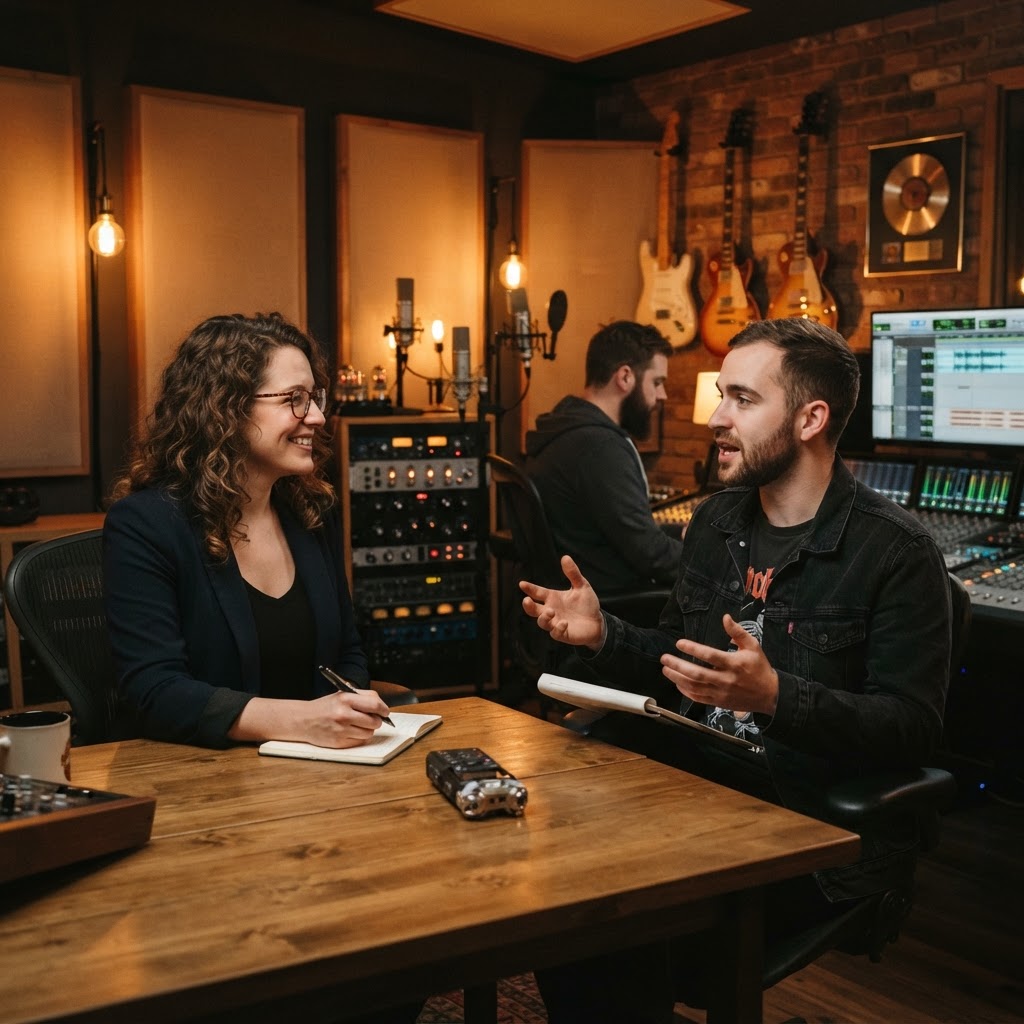
How to Successfully Execute DIY Music PR Without a Publicist
You have spent hundreds of hours in the studio, perfected your mix, and invested your savings into a release, only to face the deafening silence of a blank inbox after sending fifty cold pitches to blogs and magazines. The struggle of handling DIY music PR without a publicist is the single greatest point of failure for independent artists today. You aren't being ignored because your music is bad; you are being ignored because your pitch methodology is fundamentally misaligned with the current media landscape. Most artists treat PR as a game of persistence rather than a game of data and relationship mapping. If you want results, you must transition from an amateur email-blaster to a strategic media operator.
The Answer: Executing DIY music PR without a publicist requires moving beyond generic press releases. You must target niche writers who have covered similar artists in the last 30 days, craft a personalized pitch that demonstrates you have read their work, and offer a unique, non-music angle—like a local connection or a tech innovation—to break through the gatekeepers' barriers.
Why Most DIY Pitches Are Ignored by Journalists
The average music editor at a mid-tier blog receives between 150 and 300 pitches per day. If you are cold-emailing a general editor without having previously engaged with their content, your success rate is mathematically approaching zero. The industry standard response rate for "cold" outreach is less than 0.5%. To succeed at DIY music PR without a publicist, you must prioritize quality over quantity. Journalists do not care about your press kit or your EPK design if the story isn't pre-packaged for them. They need a hook that translates to page views.
Insider Truth: A press release is a death sentence. Journalists do not want to write about your "journey"; they want to write about a story. If your pitch contains phrases like "I am excited to announce," you have already lost. Replace them with data-driven claims: "I have secured 15,000 organic streams in 48 hours without a label, proving a direct demand for this specific genre-blend."
Furthermore, journalists operate under strict deadlines. When you send a bloated, unfocused email, you are essentially asking a busy professional to perform unpaid research on your behalf. A successful pitch must function as a mini-article in itself: headline, hook, context, and immediate assets. By failing to include these, you signal that you are an amateur who doesn't understand the media pipeline. SongBiz provides the necessary structure to professionalize this outreach, ensuring your assets are ready for immediate editorial implementation.
How to Build a Targeted Media List Like a Pro
You don't need a high-priced agency to access the media. You need a database of people who actually cover your micro-genre. Start by using tools like Chartmetric to find similar, slightly larger artists, then investigate who wrote their last three reviews or interviews. Build a CRM (a simple spreadsheet will do) containing the writer's name, their specific publication, and the last three articles they wrote about artists in your lane. Using SongBiz, you can streamline this outreach by accessing vetted PR outlets and curators directly through the dashboard, removing the need for manual, error-prone list building. Aim to build a list of 50 high-quality contacts rather than 500 low-quality ones. Your goal is to achieve a 10% response rate, which is the benchmark for professional-tier outreach.
When curating your list, segment your targets by "tier." Tier 1 consists of industry-defining publications where you have a slim chance of placement but need to establish presence. Tier 2 consists of genre-specific blogs where you have a 30-40% chance of coverage if the pitch is sharp. Tier 3 includes local newspapers and regional music newsletters. Your goal is to fill the Tier 3 and Tier 2 slots first; the resulting links and social proof become the "collateral" you use to eventually win over Tier 1 editors.
What is the response rate for DIY music PR?
For cold, unresearched outreach, the response rate is effectively 0.1% to 0.5%. For highly targeted, researched pitches that leverage a specific cultural hook or data point (like consistent growth benchmarks), the response rate jumps to 8% to 15%. Most journalists will respond within 48 to 72 hours if they are interested; anything beyond that is a ghost.
How does a "follow-up" strategy impact success?
Most journalists are overwhelmed; a single follow-up sent 3-5 days after the initial pitch can increase your success rate by 20-30%. The key is to add new value in the follow-up, such as a new data point, an updated stream count, or a "just in case you missed this" asset link. Never send more than two follow-ups total, or you risk being blacklisted as spam.
How to Write a Pitch That Gets Opened
Your subject line is your only chance. It must solve a problem for the journalist, not you. Instead of "New Song from [Your Name]," try "Question regarding your article on [Similar Artist]" or "Data: Independent [Genre] growth in [Region]." Keep the body under 150 words. Every sentence must provide a reason why this story is easy to write. If you make a journalist's job easier, you win. Remember, SongBiz provides AI-powered content generation tools that can help you draft these high-converting pitches and press assets, ensuring you sound like a professional brand from day one.
The "inverted pyramid" method is the industry gold standard for pitching. Put the most important information—the hook, the "why now," and the link to your song—at the very top. If a journalist has to scroll, you have already lost their attention. Ensure your "Smart Link" provided by SongBiz is at the top of the email, leading to a landing page that tracks clicks. This data is invaluable; knowing which publications generate the most click-throughs helps you refine your media list for your next release cycle.
Are music blogs still relevant in 2024?
Music blogs are not dead, but their role has shifted from "discovery engines" to "SEO validators." A feature on a reputable site acts as a trust signal for the Spotify and Apple Music algorithms. When you get a placement, ensure it links to your smart link. This validates your artist profile in the eyes of the platforms, helping you climb algorithmic playlists like Discover Weekly.
Technical Benchmarks for Scaling Your PR

SongBiz for Artists
Pitch your music to vetted curators and PR outlets — all in one platform
SongBiz handles playlist pitching, press outreach, booking, grant funding, and AI content creation so you can focus on making music. No label required. Start free and launch your first campaign in minutes.
Start free with SongBiz →To successfully execute DIY music PR without a publicist, you must track your "Conversion to Coverage" metric. For every 10 pitches sent, you should expect 1 to 2 replies. Out of those, 0.5 to 1 might result in an actual post. If your numbers are lower, your music or your pitch angle is the bottleneck. Do not blame the journalists. If you are struggling with engagement, use Meta BOOST through the SongBiz platform to run targeted ad campaigns. By putting your music in front of people who actually enjoy your specific micro-genre, you generate the "proof of concept" data—like save rates and skip rates—that you can then use as leverage when pitching larger outlets.
Benchmark your progress against these industry standards: an open rate of 40-50% for your pitches is considered excellent; anything below 20% indicates your subject line is failing. If you are receiving opens but no replies, your pitch body is the issue. If you are receiving replies but no posts, your music assets or story hook are not matching the journalist's expectations. Use the SongBiz analytics suite to monitor these performance metrics during every campaign to see exactly where your outreach is hitting a wall.
Leveraging AI and Automation for PR Efficiency
You cannot spend 20 hours a week pitching. Use the AI Content Studio to generate high-quality, professional assets, including artwork, social media video clips, and even supplemental content that you can offer as "exclusives" to writers. When you approach a writer, saying "I have an exclusive visual asset ready for your site" is a massive incentive for them to pick up your story. SongBiz integrates these features, allowing you to launch a coordinated campaign that looks like it came from a major label with a dedicated PR department, all while you manage it yourself.
Insider Truth: When you pitch a blog, include a Google Drive link with high-res photos and a "ready-to-use" blurb. The fewer clicks the journalist has to make, the higher the probability they hit the 'publish' button. Professionalism is defined by how much mental load you remove from the editor.
Automation does not mean mass-spamming. It means using tools to scale personalization. For instance, use mail-merge software to insert dynamic fields like the writer's name and the title of their recent article. This ensures that every email you send—even while managing a campaign of 50-100 people—reads as a personal, high-touch correspondence. SongBiz technology automates the delivery of these professional-grade assets, allowing you to maintain consistency across multiple publications simultaneously.
How do I find contact information for journalists?
Stop guessing email addresses. Use platforms like LinkedIn to see if a writer lists their contact details. Alternatively, search the "About Us" or "Contributors" pages of your target publications. If you still can't find a direct email, use a tool like Hunter.io to verify the standard email format for that specific domain. Never use generic "info@" or "submissions@" boxes; they are black holes where pitches go to die.
What is a good "save rate" for Spotify to include in a pitch?
In your pitch, if you can cite a save rate above 10% on your last three releases, you are in the top 5% of independent artists. This number indicates that your music is not just being heard, but being curated by the listeners themselves. This data is the most powerful tool you have for convincing curators to add you to their lists.
The Anatomy of a High-Conversion Asset Folder
To successfully execute DIY music PR without a publicist, your folder structure must be flawless. A journalist shouldn't have to hunt for your assets. Your shared Google Drive should contain exactly three things: a high-res folder (containing artist headshots in various crops), a "Press Assets" PDF (featuring your bio, mission statement, and key stats), and a "Ready-to-Post" folder (containing 15-second teaser clips and social media-ready graphics). Every item in these folders should be clearly named—for example, "ArtistName_Bio_PressKit.pdf" rather than "Untitled_Document.pdf." This attention to detail creates an immediate psychological impression of legitimacy, which is exactly the brand identity SongBiz helps you build.
Consider adding a "Story Angle" document to this folder. If you have an interesting story about how you recorded the track in a unique location, or how a specific software tool changed your production process, write it out in a one-page summary. This gives the journalist a narrative thread they can pull, making their writing process 70% faster. Journalists are often looking for a narrative frame, and by providing a strong one, you essentially hand them their headline on a silver platter. This is the definition of professional-tier outreach: anticipating the journalist's needs before they even ask.
Final Strategies for Long-term Media Growth
DIY music PR without a publicist is a marathon, not a sprint. Do not try to land a feature on Pitchfork on your first release. Target smaller, niche-specific blogs that live within your sub-genre. These writers are often more passionate, more accessible, and more likely to advocate for your career over the long term. Start by getting coverage in three micro-outlets, then use those articles as social proof to pitch one larger magazine. Build the snowball. With SongBiz as your foundation, you have the tools to handle the admin, the outreach, and the advertising under one roof. Stop asking for permission and start building your own media ecosystem today. Your career is not defined by one placement; it is defined by the cumulative weight of your media footprint, which is something you can build systematically if you commit to these data-driven, strategic practices.
Build your music career without a label
Join thousands of independent artists using SongBiz to get playlist placements, press coverage, booking deals, and grant funding — all from one platform. Start free today.
SongBiz Professional — Pitch. Press. Play. The all-in-one music marketing platform for independent artists. Playlist pitching, PR outreach, booking, grant funding, and AI content creation. Start free →