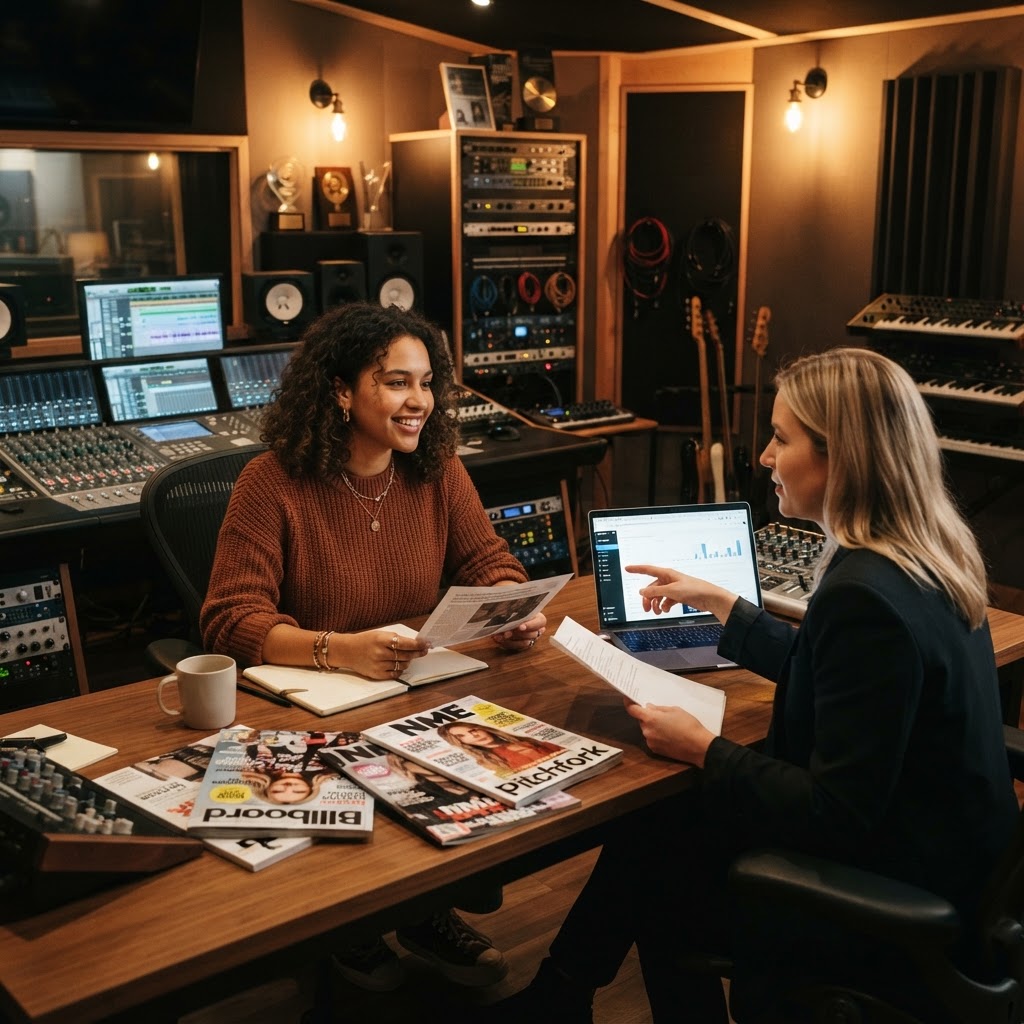
Mastering DIY Music PR Without a Publicist: The Pro Roadmap
The crushing silence that follows an email blast to music blogs is a familiar sting. You have spent hours perfecting your track, weeks crafting a personal story, and yet, the needle does not move; your inbox remains empty, and the frustration of managing DIY music PR without a publicist can make even the most passionate artist consider quitting. You are not alone, and the barrier is not talent—it is a lack of tactical precision.
Successful DIY music PR without a publicist requires a transition from 'mass mailing' to 'targeted relationship engineering.' By identifying high-relevance niche blogs, crafting pitches that solve a journalist's content gap, and leveraging data-backed follow-up cadences, independent artists can achieve press coverage success rates of 15-20%, effectively bypassing the need for expensive agency retainers.
The Core Anatomy of a Successful Pitch
Most artists treat a pitch like a resume. That is your first mistake. A journalist does not care that you spent six months in the studio or that your song has deep personal meaning—they care about the angle. If you are handling your own DIY music PR without a publicist, your primary currency is a unique, sharable story. A pitch is essentially a transaction: you provide a compelling narrative, and they provide the audience.
Journalists are under immense pressure to hit daily publishing quotas. If your pitch arrives as a ready-to-write article angle, they are significantly more likely to engage. For example, instead of pitching "my new indie-pop song," pitch "how local independent artists are using AI-generated production to disrupt the DIY scene." SongBiz provides the tools to manage these relationships efficiently, ensuring your outreach is trackable and optimized for conversions.
How Do You Build a Media List Without a Publicist?
Building a media list is not about finding 'big' outlets; it is about finding 'active' outlets. Use platforms like Chartmetric to identify which blogs and curators are actually covering artists within your specific micro-genre. A target list should consist of 50-75 outlets. Your goal is not to email the general info@ address. You need the specific staff writer who covered an artist similar to you within the last 90 days. This is the secret to DIY music PR without a publicist: specificity beats reach every single time.
When curating this list, maintain a spreadsheet that includes the journalist's name, the outlet, the link to their most recent relevant article, and the date of your last interaction. If you can mention a specific recent piece they wrote—even if it is not about music—you demonstrate that you have done the homework. This "research barrier" is where most artists fail; by simply spending two hours vetting your list, you are already ahead of 90% of the competition.
Pro Tip: If an outlet hasn't posted in 30 days, do not waste your time. Focus your DIY music PR without a publicist on active, high-frequency blogs that rely on a steady flow of indie content to maintain their own ad revenue.
The Math Behind Pitch Acceptance Rates
In the industry, a 'good' open rate for an unsolicited music pitch is between 12% and 18%. If you are hitting below 10%, your subject line is the problem. Your subject line should be structured as: [Genre] Artist | Unique Angle or Hook | [Song Name]. Never use 'Check out my new track' as a subject line. It will be archived immediately. Consider the "Journalist's Inbox" reality: they receive hundreds of emails daily. Your subject line is the billboard for your brand; make it impossible to ignore by focusing on a narrative hook rather than just the release.
Industry benchmarks for response rates are sobering: on a cold list of 50 targeted writers, expect a 5-8% conversion to actual coverage. If you pitch 50 people, aiming for 2-4 solid placements is the benchmark for success. If you are achieving this, you are successfully navigating DIY music PR without a publicist.
Advanced Asset Management and Credibility
Beyond the pitch, your EPK serves as the "Proof of Concept." Professional journalists will not write about an artist who looks like a hobbyist. Your EPK needs to signal that you are a career-focused entity. This means including a "Media Assets" section that contains high-resolution press photos (horizontal and vertical), a clean bio that avoids hyperbolic marketing language (e.g., "the next big thing"), and links to your streaming performance. Journalists look for "social proof"—if you have 50,000 monthly listeners on Spotify, lead with that. If you are an emerging artist, lead with your unique visual aesthetic or a notable touring history. SongBiz helps organize these assets, ensuring that when a writer clicks your link, they find a professional, ready-to-publish media kit.
Why Do Music Blogs Ignore My Pitches?
The primary reason is a lack of 'assets.' If you don't have a high-quality EPK (Electronic Press Kit) that includes a one-sheet, high-resolution imagery, and a private listening link (SoundCloud or Dropbox—never attachments!), you will be ignored. Most DIY music PR without a publicist fails because artists attach large files that clog up a journalist's inbox. Always provide a link to a Google Drive folder that is clean, professional, and easy to access.
Leveraging SongBiz for Scalable Outreach
Managing the workflow of a publicist is a full-time job. SongBiz acts as your force multiplier. It is the all-in-one platform for independent artists: playlist pitching, PR outreach, booking, grant funding, and AI content creation. When you use the platform to pitch to vetted PR outlets, you are utilizing established channels, significantly increasing your chances of a reply compared to cold-emailing generic contact forms.
Integration is key to scaling. By utilizing SongBiz to aggregate your contacts and draft your pitches, you maintain a consistent "voice" and "brand identity" across all channels. If your PR efforts are disconnected from your social media content, your audience will feel that lack of cohesion. SongBiz helps you synchronize your release timeline with your outreach, ensuring that your press hits coincide with your major content drops on platforms like Instagram and TikTok.
How Should You Structure a Pitch to Ensure Engagement?
Keep your pitch under 150 words. Start with a hook related to the journalist's recent work, briefly introduce your sonic identity, provide the "why now" (the angle), and include your private streaming link with a call-to-action that respects their time, such as "Let me know if this fits your current editorial focus."
The Multi-Channel PR Strategy
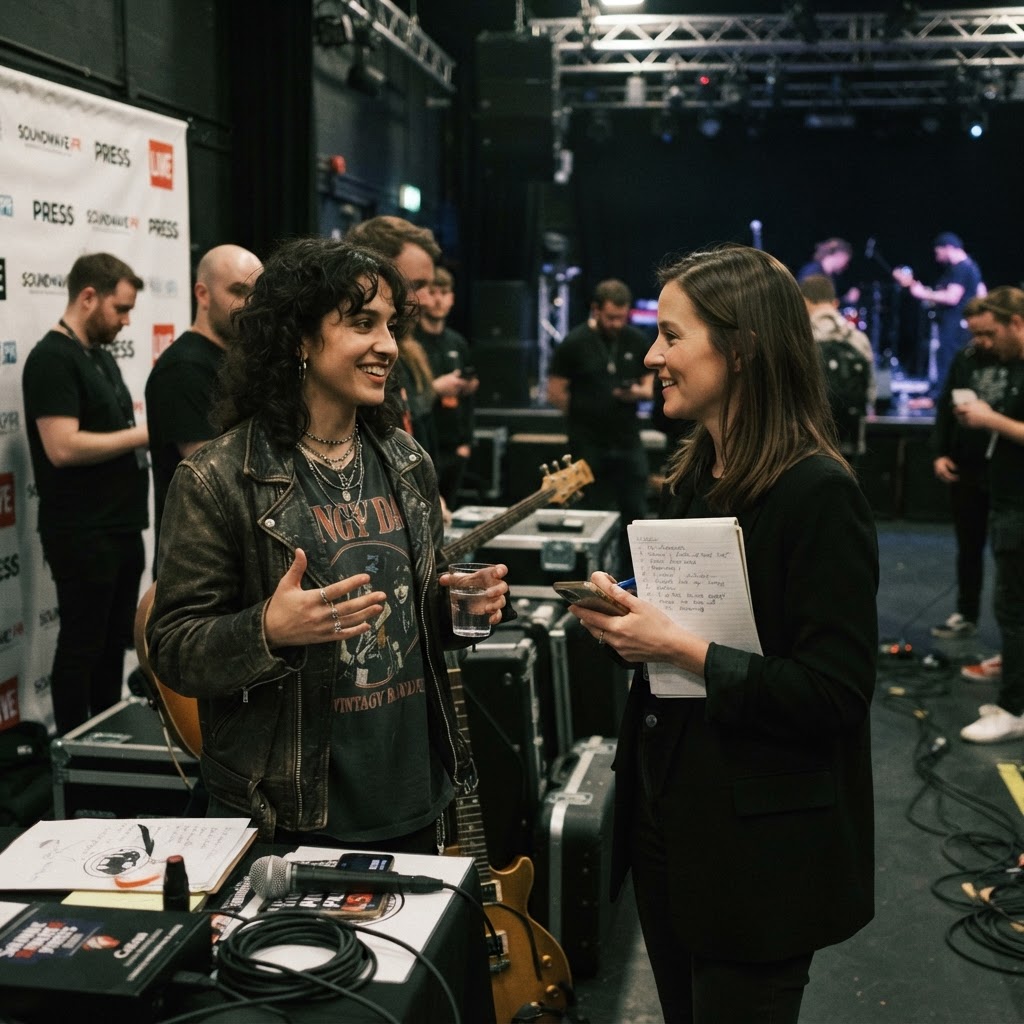
SongBiz for Artists
Pitch your music to vetted curators and PR outlets — all in one platform
SongBiz handles playlist pitching, press outreach, booking, grant funding, and AI content creation so you can focus on making music. No label required. Start free and launch your first campaign in minutes.
Start free with SongBiz →You cannot rely on blogs alone. DIY music PR without a publicist requires a holistic approach. Use Meta BOOST on SongBiz to run music-optimized ad campaigns that target listeners who are likely to share your music. When a blog covers you, immediately turn that coverage into an ad asset. This creates a feedback loop: PR drives credibility, and ads drive the stream counts that make your next pitch easier to sell.
When you have a piece of coverage, use that as a "trust signal." Place the logos of the outlets that covered you on your website, in your EPK, and in your social media bio. This creates a psychological effect known as the "Bandwagon Bias." When a journalist sees that others have vetted your music, the perceived risk of covering you drops. This is a subtle, high-level tactic that experienced PR agents use to build momentum for their clients.
Real Talk: A journalist is 3x more likely to cover an artist who already has 50k streams and a demonstrated history of independent growth. They are looking for 'proven' talent to reduce their own editorial risk.
The Power of the Follow-Up
If you have not received a reply within 4-5 business days, send one polite follow-up. That is it. If they don't respond to the follow-up, move on. The most effective DIY music PR without a publicist involves knowing when to cut your losses and re-allocate that time to better prospects. SongBiz allows you to manage these relationships within one dashboard, ensuring no lead falls through the cracks.
Your follow-up should not be a "just checking in" email. It should offer new value. Examples include: "I forgot to mention, this track was recently added to X popular playlist," or "I'm performing at Y venue next week." Keep it brief, keep it professional, and never sound accusatory. If a writer hasn't responded, they are likely just busy, not malicious. Respecting their time is the fastest way to get them to respond to your *next* pitch.
What Is the Best Time to Send a Music Pitch?
Tuesday and Wednesday mornings, between 8:30 AM and 10:00 AM in the recipient's timezone, are the 'golden hours.' Most journalists spend their Monday catching up on weekend emails and their Friday trying to clear their desk. By hitting their inbox early in the work week, you maximize your visibility. Furthermore, if you are targeting international blogs, be mindful of their specific time zones—if you are in London pitching to a Los Angeles-based outlet, schedule your email for their morning, not yours.
Executing Your First Campaign
- Identify 50 relevant blogs using data tools; look for writers who covered 'you-like' artists.
- Refine your pitch hook—make it a story, not a sales pitch.
- Build a clean, cloud-based EPK with high-res photos and bio.
- Submit to curated lists via SongBiz to ensure your music reaches vetted outlets.
- Run a Meta ad campaign alongside the launch to signal algorithmic 'heat' to potential curators.
By following these steps, you are not just hoping for a miracle; you are executing a strategy that puts you in the top 5% of independent artists who treat their career as a professional enterprise. Start free and launch a campaign in minutes with SongBiz to see how professional-grade outreach transforms your results. The difference between an amateur and a pro is often just a commitment to process-driven growth.
Frequently Asked Questions
How long does it take to see results from DIY music PR?
Real momentum in DIY music PR without a publicist usually requires a 3 to 6-month cycle. It is about building a 'digital footprint.' Start by aiming for smaller, niche blog features, then use those features to pitch to larger magazines. It is a compounding process that requires consistency, not just a one-off attempt. Most artists expect overnight success, but the industry standard is iterative growth based on established credibility.
Should I pay for PR services if I am a DIY artist?
Only if you have an established track record (at least 50k monthly listeners and a budget over $2k). For most independent artists, paying for PR early on is a waste of capital. Using platforms like SongBiz to handle your own PR allows you to save that money for ad spend and content creation, which often yields a higher ROI. PR without existing streams is like building a house without a foundation; it will struggle to stand on its own.
What is the most common mistake in a DIY music pitch?
The biggest mistake is 'spamming.' Sending the same generic email to 500 bloggers is a guaranteed way to get blacklisted. Effective DIY music PR without a publicist requires personalizing at least 30% of your email—mentioning a specific article they wrote or a recent song they covered. Quality over quantity is the only rule that matters. If a blogger sees you haven't read their work, they will assume you haven't researched their audience, and they will delete the email immediately.
How can I get my music in front of PR outlets for free?
You can use platforms like SongBiz, which provides an all-in-one hub for artists to access vetted PR contacts and playlist curators. Additionally, focus on building your brand assets—a cohesive visual identity and high-engagement social media presence—as these are often just as important as the music itself when pitching to professional media outlets. Treat every social post as a portfolio piece that shows potential journalists exactly how you present your art to the world.
How do I handle negative feedback or lack of interest from journalists?
Do not take it personally. Most silence is simply a matter of timing or editorial alignment, not a rejection of your musical talent. In the PR industry, the average reply rate is low. Rather than chasing, refine your assets, optimize your hooks, and move to the next contact. Every "no" or "ignored" helps you pivot your strategy until you find the outlets that truly resonate with your sound.
Build your music career without a label
Join thousands of independent artists using SongBiz to get playlist placements, press coverage, booking deals, and grant funding — all from one platform. Start free today.
SongBiz Professional — Pitch. Press. Play. The all-in-one music marketing platform for independent artists. Playlist pitching, PR outreach, booking, grant funding, and AI content creation. Start free →