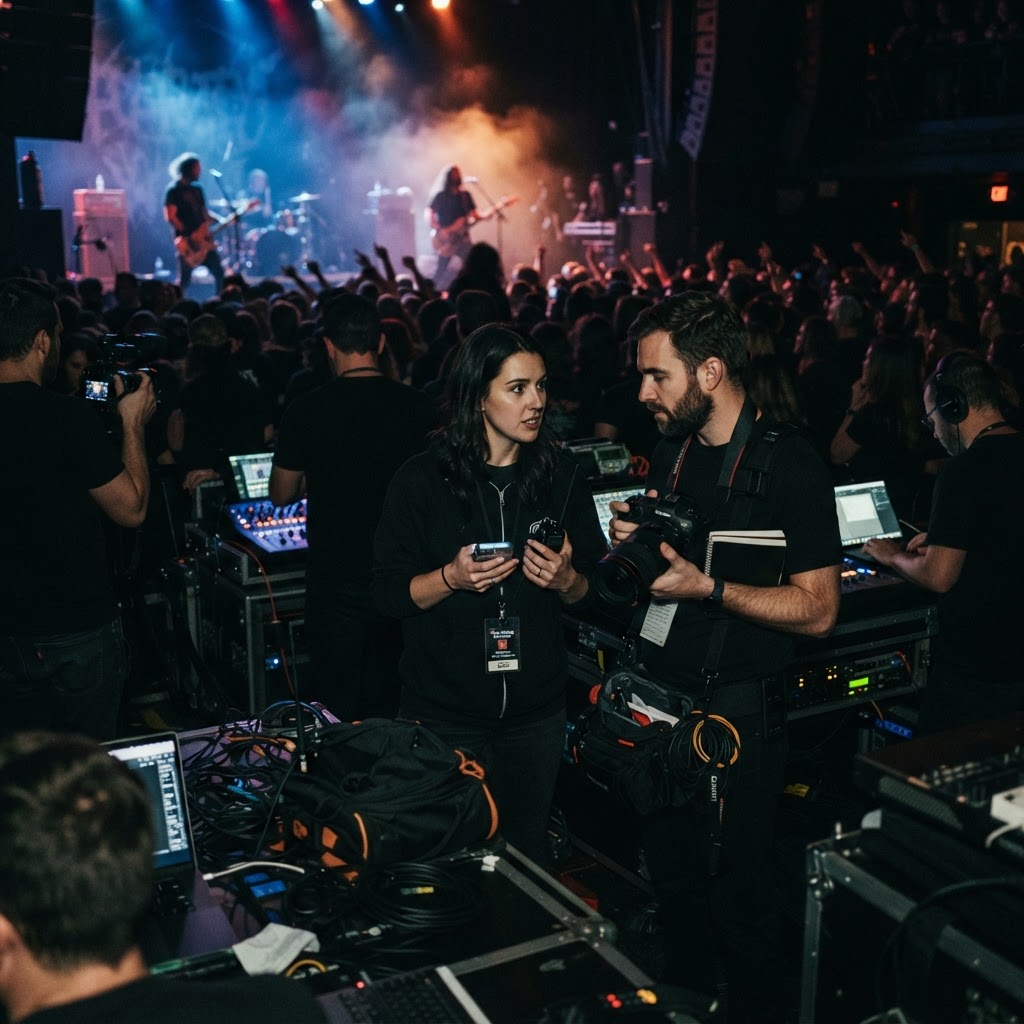
DIY Music PR Without a Publicist: The Data-Driven Roadmap
You have spent hundreds of hours perfecting your latest EP, yet when you send your press release into the digital void, you are met with deafening silence. The frustration of being ignored by journalists after crafting a heartfelt story is a rite of passage for independent artists, but it doesn't have to be your permanent reality. Executing DIY music PR without a publicist is not about having a Rolodex of celebrity connections; it is about adopting the same systemic outreach protocols used by major labels to filter and target high-value media outlets effectively.
Successfully executing DIY music PR without a publicist requires a strategic transition from 'spamming' to 'curated pitching.' To win coverage, you must identify media outlets that actively cover your specific sub-genre, draft pitches that highlight a clear narrative hook rather than just your music, and track your open rates to refine your subject lines. With tools like SongBiz, which integrates playlist pitching, PR outreach, and AI-powered content creation into one dashboard, you can bypass the gatekeepers and manage your media relationships directly.
The Core Anatomy of a PR Pitch That Actually Gets Opened
The biggest misconception in the industry is that journalists are waiting for your link. They are not. They are waiting for a story that makes them look intelligent to their readers. If your email subject line reads 'New Track Out Now,' your open rate will likely hover around 2-3%. If you shift your focus to DIY music PR without a publicist, you must rewrite your pitch to lead with a 'hook'—a personal connection, a unique production technique, or a localized tour angle. A hook acts as the emotional or intellectual anchor that compels a writer to click, ensuring your music serves a narrative purpose rather than acting as an interruption.
What is the response rate threshold for an effective DIY pitch?
In a saturated market, a response rate of 5-8% is considered high-performing. If you are sending 100 emails and getting 0 replies, the issue is your target list or your value proposition. Aim for a 'warm' list where you have identified at least one prior article the writer has penned regarding your genre. Using the SongBiz dashboard to reach vetted PR outlets ensures your music lands in inboxes where there is a documented history of support for independent talent, significantly lowering the friction of cold outreach.
Pro Truth: A journalist is 70% more likely to open an email if the subject line references a specific, recent article they wrote. This proves you aren't a bot and increases your response threshold from a 1% luck factor to a 10% strategic engagement.
Scaling Your Outreach With Precision and Data
Once you begin your journey of DIY music PR without a publicist, you need to treat your inbox like a CRM. Stop sending blind BCC blasts; they are the fastest way to get blacklisted by editorial spam filters. Instead, categorize your media contacts into tiers: Tier 1 (major publications like Pitchfork or Stereogum), Tier 2 (regional blogs and genre-specific curators), and Tier 3 (niche playlist curators and student radio). Professional PR campaigns utilize a waterfall strategy: pitch Tier 1 outlets four weeks in advance of a release, then move to Tier 2 and 3 as the launch date approaches. This creates a "momentum ripple" where the coverage from smaller blogs acts as proof-of-concept for the larger, more selective publications.
How do I build a media contact list from scratch?
Start by identifying 50 blogs that covered an artist similar to your sound in the last three months. Use advanced Google search queries like 'site:blogname.com [artist name]'. Once you have those names, cross-reference them with their social handles. When you perform DIY music PR without a publicist, personalization is your only currency. Mentioning a specific nuance in their past writing shows you are a peer, not a solicitor. By maintaining a spreadsheet of these contacts—including the date of last contact and the nature of their response—you create a proprietary asset that gains value with every release.
- Use SongBiz for Artists to identify curators who consistently support your micro-genre.
- Segment your list by publication size to manage outreach volume.
- Draft three variations of your pitch: one for editorial, one for playlists, and one for community news.
- Track your open rates and bounce rates; prune inactive emails every 30 days.
- Follow up exactly once, seven days after the initial send, with a 'news update' (e.g., 'We just hit 5k streams on this track').
Why Your Narrative Matters More Than the Music
Media outlets are not in the business of playing music; they are in the business of selling stories. If you want to succeed at DIY music PR without a publicist, you have to provide a 'press asset pack' that makes a journalist's job easier. This includes a high-res photo, a 100-word bio, and a link to your EPK. If you are struggling to produce these, the SongBiz AI Content Studio can generate professional press materials, artwork, and even video assets that give you the 'label look' without the label budget. A compelling narrative often centers on the 'why'—why was this song written, what specific cultural issue does it address, or what production constraints forced you to become more creative? These details provide the context that differentiates a professional release from a casual upload.
Understanding the Psychology of Curator Approval
Curators and journalists are often overwhelmed. When they scan a pitch, they are looking for 'risk indicators.' If your email is too long or missing a direct link to the press assets, they will close it. DIY music PR without a publicist succeeds when you reduce the friction of the 'yes.' Keep your pitch under 150 words. Provide the streaming link clearly (using a smart link from a service like Linktree or the integrated tools within SongBiz) so the journalist can audition your track in one click. Remember, every extra click or login wall you place between the journalist and the audio significantly increases the likelihood that they will move on to the next pitch in their queue.
The Role of Meta Ads in PR Leverage
SongBiz for Artists
Pitch your music to vetted curators and PR outlets — all in one platform
SongBiz handles playlist pitching, press outreach, booking, grant funding, and AI content creation so you can focus on making music. No label required. Start free and launch your first campaign in minutes.
Start free with SongBiz →A secret of professional PR firms is using Meta ads to build social proof before reaching out to press. If a journalist checks your Instagram and sees zero engagement, they are less likely to risk their reputation on you. By running targeted Meta BOOST campaigns via SongBiz to your niche audience, you create an aura of momentum. When you later email a blogger and mention your song has reached 10,000 streams and has a growing fanbase, you aren't just an 'artist'; you are a 'data-backed investment' for their publication. This method effectively turns your marketing budget into a validation tool that makes your PR outreach substantially more credible.
Pro Truth: Media outlets prioritize artists who show 'audience velocity.' If your streams are climbing, you have leverage. Use this data in your pitch to pivot from 'please write about me' to 'I am building a movement, and here is your invite.'
Fixing the Stagnation: When to Pivot Your Campaign
If you have sent 200 emails and haven't received a single 'yes,' you are hitting a wall. Perform a post-mortem on your campaign. Is your production quality at a commercial standard? Is your branding clear? Sometimes, the problem is that your music is good, but your pitch is dry. Use SongBiz for Artists to monitor which assets are performing best, and don't be afraid to change your narrative hook mid-campaign. DIY music PR without a publicist requires agility—if the press doesn't bite on the 'emotional story,' pivot to the 'data story' (e.g., 'This track is gaining traction in the UK indie scene'). Furthermore, ensure your landing pages are optimized. If your pitch is effective but your website is broken or unorganized, you will lose the lead during the vetting process.
What is the standard conversion rate from PR coverage to listeners?
On average, a mention in a mid-sized blog converts at about 1-2% into actual followers or streams. However, if that coverage is on a high-intent niche blog, it can spike to 5%. This is why targeting the *right* outlet is infinitely more valuable than targeting the *biggest* outlet. A thousand readers on a specialized blog are worth more than a million casual impressions on a general news site. Focus on building long-term relationships with these niche curators; their endorsement provides a compounding effect on your career growth that one-off major press mentions rarely achieve.
How can I leverage cross-platform metrics to boost my PR credibility?
Integrating your Spotify for Artists data with your Instagram Insights provides a comprehensive 'Artist Health' score. When pitching, mention your 'save rate' or 'listener retention' alongside your follower count. Journalists are increasingly savvy about vanity metrics; providing granular, high-engagement data points proves that your audience is active, loyal, and likely to consume the content the journalist publishes about you.
Refining the Long-Term Strategy
Successful DIY music PR without a publicist is not a one-time event; it is a cumulative process. Every article you secure should be added to a 'Press' tab on your website. When you reach out to a new journalist, link to these previous write-ups. This creates a psychological phenomenon known as 'social proof signaling.' If three other bloggers have written about you, the fourth is statistically more likely to do so, as the 'risk' of writing about an unproven artist has been mitigated by the prior endorsements of their peers. Use your SongBiz dashboard to archive all coverage, as these assets become the foundation for your next press release, creating a virtuous cycle of media exposure.
Frequently Asked Questions
How long should my PR pitch be?
Keep your pitch under 150 words. Journalists spend an average of 10 seconds scanning a new email. Lead with your strongest hook, include one link to your music, one link to your press assets, and a clear, actionable request. Anything longer is noise that leads to the delete button.
How do I find the right journalists for my genre?
Use platforms like SongBiz to access vetted lists, or use tools like Chartmetric to see which bloggers have covered similar artists. Look for writers who have posted about artists with similar follower counts, as they are more likely to be open to emerging talent. Research their recent articles to ensure they still cover your genre.
When is the best time to send a PR email?
Data consistently shows that Tuesday, Wednesday, and Thursday mornings (between 8:00 AM and 10:00 AM in the recipient's time zone) yield the highest open rates. Avoid Mondays, when inboxes are cluttered with the weekend's backlog, and avoid Fridays, when editors are wrapping up work and planning for the weekend.
What should I include in my press kit?
Your press kit should include at least two high-resolution press photos, a short bio (under 200 words), a link to your streaming music (using a universal link), and links to your social profiles. If you have video assets or a recent press quote, include those to build authority. The SongBiz AI Content Studio can help you assemble these professional assets quickly.
How do I handle rejection in a DIY PR campaign?
Rejection is rarely about your music and almost always about the publication's current editorial calendar or focus. If you do not receive a response, do not take it personally. Use the 'two-strike' rule: send one follow-up after seven days, and if there is still no reply, move on. Maintain your professionalism, as the same journalist may be a perfect contact for your next single release.
Build your music career without a label
Join thousands of independent artists using SongBiz to get playlist placements, press coverage, booking deals, and grant funding — all from one platform. Start free today.
SongBiz Professional — Pitch. Press. Play. The all-in-one music marketing platform for independent artists. Playlist pitching, PR outreach, booking, grant funding, and AI content creation. Start free →