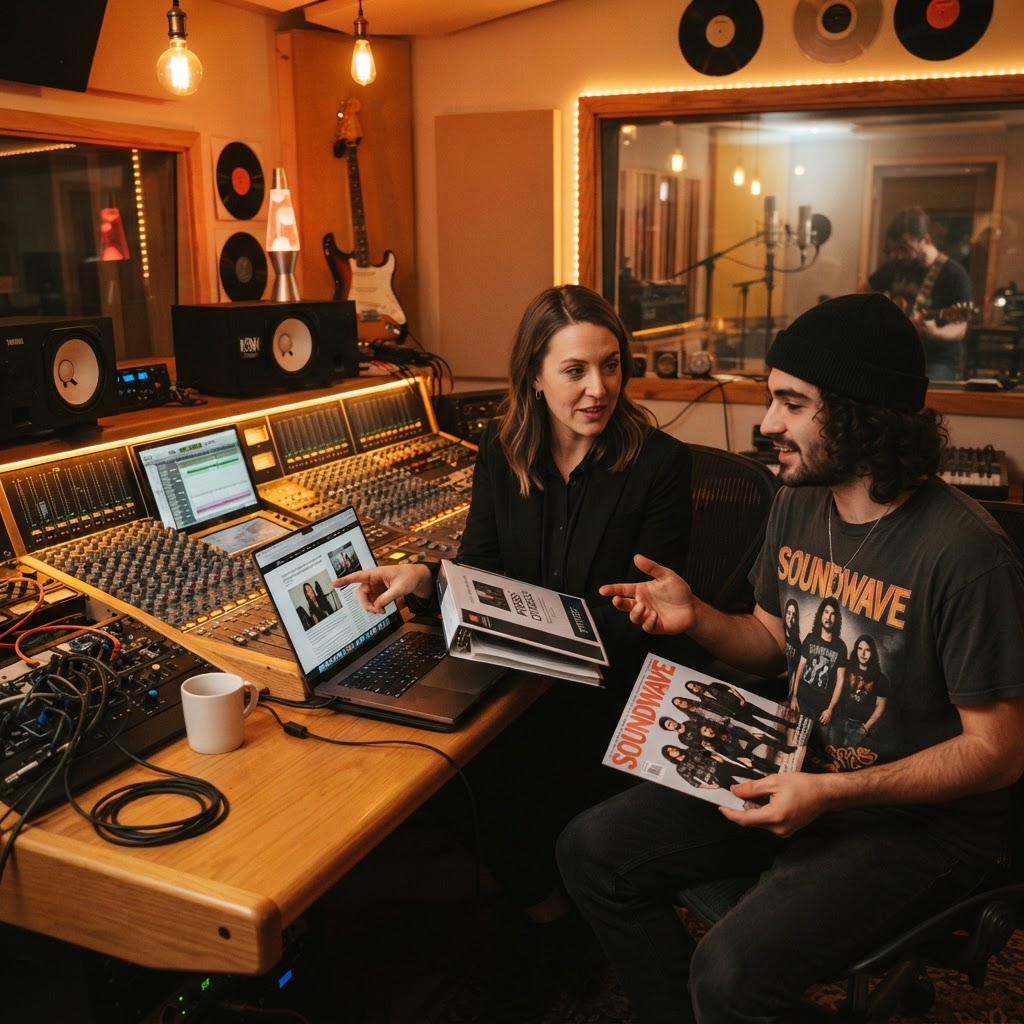
How to get your album reviewed without hiring a publicist: The Proven Strategy
You have poured your soul into an album, but hitting 'send' on a pitch email feels like shouting into a void. You are not alone; the music industry is notoriously gatekept, and the realization of how to get your album reviewed without hiring a publicist is often the biggest hurdle for an independent artist. Most musicians quit because they do not understand that journalists, bloggers, and editors are not looking for 'good music'—they are looking for a story that fits their specific beat, audience, and release schedule. To succeed, you must move beyond the amateur mindset of "my music speaks for itself" and adopt the professional rigors of an independent music entrepreneur.
To get your album reviewed without hiring a publicist, you must stop mass-emailing and start building hyper-targeted, value-driven relationships. Identify 20-30 blogs or curators who cover your exact micro-genre, craft a pitch that highlights a unique narrative or 'hook' rather than just the music, and send your personalized pitch at least 4-6 weeks before your release date to ensure lead time for their editorial calendars.
Why Most Cold Pitches Get Ignored by Music Journalists
The average music editor at a reputable outlet receives between 200 and 500 emails per day. If your email contains an attachment or a generic 'Hey, please review my album' line, it is deleted within three seconds. Professional editors look for 'readiness.' If you do not have a professionally formatted Electronic Press Kit (EPK) with high-resolution imagery, streaming links that do not require account logins, and a clear, 150-word pitch body, you are immediately disqualified.
SongBiz allows you to manage this outreach through one dashboard, ensuring that your assets are always professional and accessible. When you learn how to get your album reviewed without hiring a publicist, you realize that your pitch is a product. Treat it with the same creative effort you gave your lead single. Journalists are operating under strict quotas; they need content that is easy to package. If your email requires them to hunt for a photo or log into a platform to hear the song, you have failed the fundamental barrier to entry: ease of use.
Pro Tip: Never send a Google Drive link that requires the editor to request access. Use a public, non-expiring link like a private SoundCloud stream or a dedicated landing page. If you create an obstacle, the journalist will close your email and never return.
People Also Ask: How many pitches should I send to get one review?
Industry benchmarks suggest a response rate of roughly 3-5% for cold outreach. If you want one guaranteed feature, you should be pitching at least 30 to 50 targeted contacts. If you are not hitting those numbers, your 'how to get your album reviewed without hiring a publicist' strategy is likely too narrow. Use the SongBiz database to expand your reach to vetted PR outlets that actually respond to independent artists.
People Also Ask: What is the ideal lead time for a premiere versus a standard review?
For a premiere—where a blog debuts your track exclusively—you need to approach the editor at least 6 weeks in advance. For standard album reviews, 4 weeks is the absolute minimum, as editors plan their weekly editorial calendar mid-month for the following month. Giving them less time creates a "panic" factor that makes editors choose easier, pre-planned content instead.
The Anatomy of a High-Conversion Pitch Email
Stop writing bios that read like an autobiography. Journalists need a hook—a narrative that makes your music feel relevant to the current cultural moment. Are you an artist using unique AI-assisted soundscapes? Are you a DIY producer who built a following from scratch using specific social media strategies? That is your lead.
- The Subject Line: Needs to be specific and indicate the value. Example: 'PREMIERE: [Artist Name] Tackles Climate Change in New Synth-Pop Anthem (For [Publication Name]).'
- The Hook: One sentence on why your story is timely. Use a data point if you have one, such as a recent viral TikTok trend or a unique sonic choice.
- The Context: Two sentences on who you are and your recent milestones (e.g., '10,000 monthly listeners on Spotify' or 'Support slot for [Notable Artist]').
- The Asset: Link to your private stream (e.g., SoundCloud or Disco) and one high-res press photo. Never embed audio or video files into the email body; always use links.
- The Call to Action: A simple, low-friction question: 'Would you be interested in an exclusive stream before the Friday launch?'
By treating the editor as a collaborator rather than a customer, you shift the dynamic. You are providing them with content that solves their problem of needing daily articles. This mindset shift is essential when mastering how to get your album reviewed without hiring a publicist.
The Critical Importance of Micro-Genre Targeting
The "spray and pray" method is a career-killer. Many artists make the mistake of emailing every writer who has ever written about music. However, a writer who focuses on heavy metal will not care about your indie-folk record. You must categorize your outreach based on your specific micro-genre. Use SongBiz to cross-reference journalists who have written about artists similar to you in the last six months. When you mention a specific piece of their previous work in your email—such as, "I really enjoyed your recent breakdown of [Artist's] album"—you prove you are not a bot.
This level of research is what separates a professional musician from an amateur. If you can identify the top 50 blogs that specifically cover "bedroom pop" or "experimental ambient," your conversion rate can jump from 2% to nearly 15%. This is the true power of granular targeting; you are not looking for the biggest blog in the world, but the one whose audience is most likely to click through and stream your music immediately.
Using AI to Scale Your Outreach Efforts
The hardest part of learning how to get your album reviewed without hiring a publicist is the sheer volume of writing required. You need to customize every email, yet you have limited time. This is where AI content creation becomes an essential tool. You can use tools to draft variations of your pitch that emphasize different aspects of your album for different types of outlets (e.g., a technical deep dive for a gear blog vs. a narrative-focused story for a local paper).
With SongBiz, you can leverage AI content tools to generate your press releases and social assets to accompany your pitches. This ensures you maintain a consistent brand identity across all media channels while keeping your outreach personalized. Start by creating a "base pitch" that contains your core facts, then use AI to rewrite that base to suit different publications. For example, if you are pitching to a tech-focused music site, have the AI emphasize the production techniques you used. If you are pitching to a lifestyle blog, have the AI emphasize the lyrical themes or the emotional journey of the album.
Building Relationships: Beyond the First Review
Publicists are not just 'email senders'; they are relationship managers. They know which editors cover specific sub-genres and have spent years building rapport. You can replicate this by engaging with journalists' work on social media *before* you pitch them. Comment on their articles, share their pieces, and tag them when you mention their publication. By the time you send your pitch, your name should already be familiar to them. This is the secret layer to how to get your album reviewed without hiring a publicist.
Consider this a long-term investment. Music journalism is a volatile field; writers move from blog to blog. By maintaining a personal relationship with the writer, they will often bring you along to their new publication. Do not just treat them as a vessel for your music; treat them as a peer in the industry. Send them "updates" on your career even when you aren't asking for anything, such as a milestone in your streaming numbers or a new tour announcement. A simple, "Just wanted to share that we hit 50k streams thanks to your initial support!" goes a long way in securing coverage for your next project.
Insight: A journalist is 70% more likely to open an email from someone who has engaged with their content on LinkedIn or Twitter in the last 30 days.
People Also Ask: What if I don't have a large social media following?
Smaller blogs and niche outlets actually prefer 'under-the-radar' artists. They want to be the ones who discovered you. Do not target Rolling Stone with your first release; target blogs with 5,000–20,000 monthly unique visitors. They are hungry for content and far more likely to review an independent artist who shows promise. Focus on building "proof of concept" with smaller wins, then use those reviews to leverage larger features later.
How to Measure Your PR Success and Pivot
SongBiz for Artists
Pitch your music to vetted curators and PR outlets — all in one platform
SongBiz handles playlist pitching, press outreach, booking, grant funding, and AI content creation so you can focus on making music. No label required. Start free and launch your first campaign in minutes.
Start free with SongBiz →Not every pitch will land. You need to track your 'Open Rate' and 'Click-Through Rate.' If you have sent 50 pitches and have a 0% open rate, your subject line is the problem. If you have high open rates but no replies, your pitch body or your music is not resonating. Use platforms like SongBiz to manage your contact lists and track which outlets are actually engaging with your assets.
Data is your best friend. If you see that your emails sent on Tuesday mornings have a higher open rate than those sent on Friday afternoons, shift your entire schedule. If you notice that specific blogs never open your emails, remove them from your list and stop wasting your energy. This data-driven approach is the bedrock of how to get your album reviewed without hiring a publicist. It allows you to focus your limited time on what actually produces results, rather than shooting into the dark.
The Role of Video in Your Pitch
In the modern age, text is secondary to video. If you can provide a high-quality "EPK" video—a 60-second clip that includes the best segment of your single, high-quality performance footage, and a quick snippet of you talking about the concept—your odds of success improve exponentially. Editors are often time-poor and prefer a quick video over reading a long biography. Ensure your video is hosted on an easily shareable platform like YouTube (unlisted) or Vimeo, and keep the file size small enough to load instantly on mobile devices.
When you include a video, you are essentially doing the journalist's work for them. They can easily embed that video into their blog post, which saves them from having to track down footage themselves. This "low-friction" approach is exactly how you win the favor of busy editorial teams.
People Also Ask: Is it better to focus on blogs or Spotify playlists?
They serve different purposes. Blogs provide 'social proof' and permanent web presence, which helps with SEO and booking agents. Playlists drive immediate streaming numbers. A healthy strategy does both. Use SongBiz to pitch to vetted Spotify curators while simultaneously running your PR email campaign. Do not choose one over the other; use the blog coverage to validate your credibility, which in turn makes it easier to get added to high-authority Spotify playlists.
The Power of Meta Ad Campaigns for PR
You can actually use Meta ads to support your PR outreach. By running a campaign targeting 'Fans of [Artist in your genre]' and driving them to your press page or a 'Press Highlights' video, you build authority. When a journalist clicks your link and sees you have a growing audience and a professional aesthetic, your chances of getting that review spike significantly. SongBiz offers Meta BOOST, which allows you to run music-optimized campaigns to get your tracks in front of the right listeners, creating the momentum that journalists look for.
By building a small, dedicated audience, you show the journalist that you are not just a musician with a dream, but an artist with a fanbase. This "social validation" is a critical metric for editors. If they write about you and their readers engage with the link, the journalist looks good to their editor. They want to avoid writing about artists who get zero traction.
People Also Ask: How long should my album be out before I stop pitching it?
You have a window of about 2 weeks before the release and 4 weeks after. After that, your release is considered 'old news' unless you are releasing a new video or remixes. Always focus your efforts on the 'release cycle' to maximize your chances of success. Never stop learning how to get your album reviewed without hiring a publicist—it is a skill that will pay dividends throughout your career.
How to Maintain Professionalism with Editorial Teams
Once an outlet agrees to cover you, the work is not over. You need to be prompt, provide high-quality assets, and thank them. Many artists ruin future opportunities by being difficult to work with. If a journalist asks for a quote or a specific photo file, deliver it within 24 hours. They are doing you a favor, even if you are providing them with content. Professionalism is the quickest way to turn a one-time feature into a long-term relationship.
Keep a folder on your computer labeled 'Press Assets' that includes your bio in various lengths (50, 150, and 500 words), your press photos (portrait and landscape), and your high-quality audio files in both MP3 and WAV formats. When an editor emails you, you should be able to send them everything they need within minutes. Being the "easy to work with" artist is a reputation that travels fast in the tight-knit world of music journalism. If you have that reputation, you will find that journalists start coming to *you* for features.
The Long-Term Value of Your PR Database
The final pillar in learning how to get your album reviewed without hiring a publicist is the maintenance of your own media database. Every interaction, whether successful or a rejection, should be recorded. Note when a writer was interested, when they ignored you, and what topics they seemed to like. Over time, this database becomes your most valuable career asset. It allows you to build a custom PR list that only grows stronger with every release.
Using the SongBiz platform to centralize this data ensures that you never lose track of who you have contacted or the status of your pitches. As you move from your first EP to your third LP, you will find that your pitch-to-coverage ratio improves dramatically. You are moving from a stranger cold-calling into the dark to an industry professional managing a list of established media contacts. This transformation is the goal, and it is entirely achievable without ever signing a contract with a third-party publicist.
Final Thoughts on Scaling Your Music Career
Getting press is a volume and relationship game. By mastering these tactics, you take the power out of the hands of labels and into your own. You are now the architect of your own media strategy. Continue refining your approach, using tools like SongBiz to streamline the technical backend, and never stop pitching. You have the music—now make sure the world hears the story behind it. Persistence is the final ingredient; while many artists give up after one or two failed attempts, the ones who succeed are those who treat every rejection as a data point and every small success as a foundation for a larger, more impactful campaign. Your story matters, and with the right strategy, your album will find the audience it deserves.
Build your music career without a label
Join thousands of independent artists using SongBiz to get playlist placements, press coverage, booking deals, and grant funding — all from one platform. Start free today.
SongBiz Professional — Pitch. Press. Play. The all-in-one music marketing platform for independent artists. Playlist pitching, PR outreach, booking, grant funding, and AI content creation. Start free →