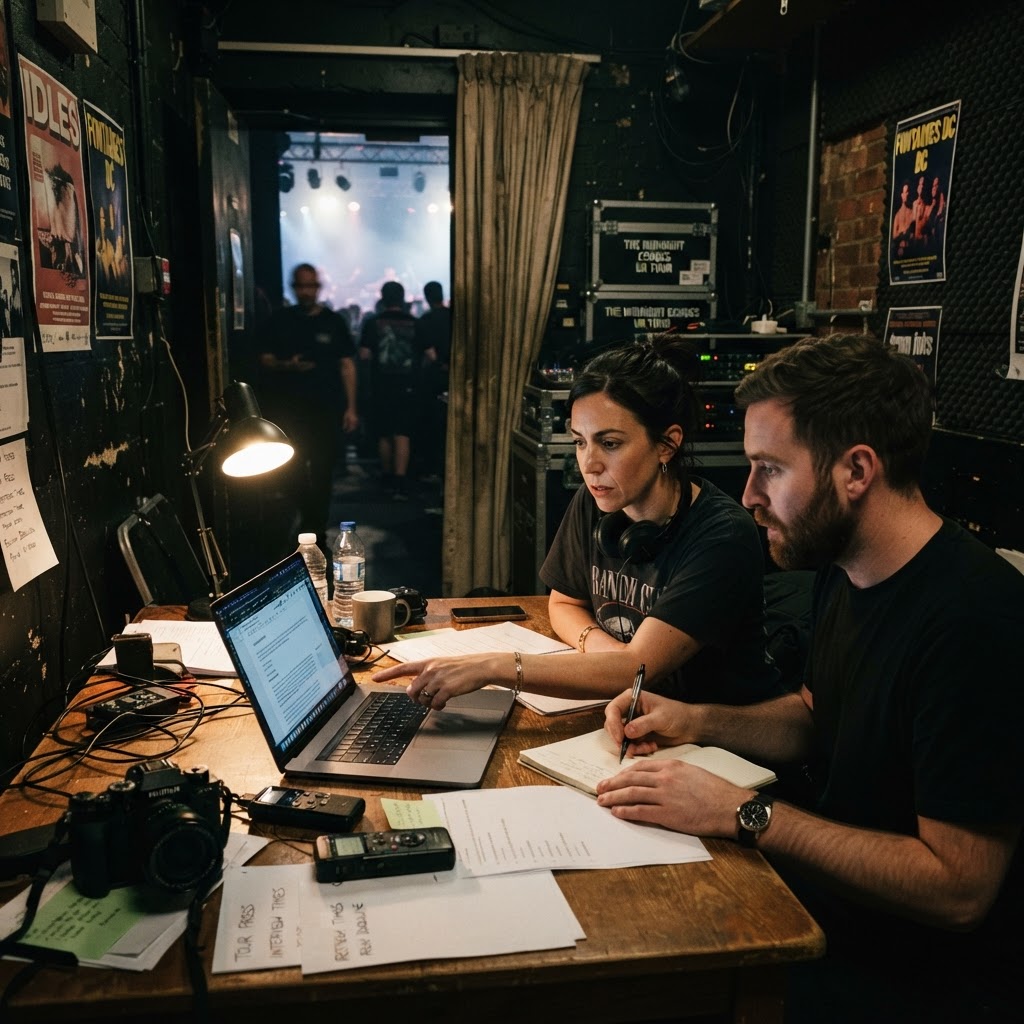
How to Get Your Music Featured in Blogs and Magazines
You have spent months in the studio, poured your soul into a production, and polished the mix, yet every time you hit 'send' on a press email, you are met with deafening silence. The frustration of being ignored by journalists is a rite of passage for independent artists, but it shouldn't be your permanent reality. Learning how to get your music featured in blogs and magazines is less about luck and more about understanding the specific, data-driven mechanics of media relations that professional publicists use to secure placements.
To successfully get your music featured in blogs and magazines, you must abandon mass-emailing templates in favor of hyper-personalized, value-driven pitches. Target outlets that specifically cover your micro-genre, attach a high-quality electronic press kit (EPK) with a private streaming link, and follow up exactly once after 72 hours. Success relies on proof of audience traction—having at least 1,000 monthly listeners or a specific viral moment—to validate your professional worth to gatekeepers. SongBiz provides the framework necessary to cultivate this professional image, offering tools that help you align your release rollout with industry-standard PR expectations.
Why Your Current Pitch Strategy Fails to Generate Press
The primary reason most artists struggle to get press is the 'scattergun' approach. Most journalists receive between 50 to 200 emails a day. If your subject line reads 'New Track Out Now' or 'Please Review My Song,' your email will be deleted before the preview pane even loads. Media outlets aren't looking for 'new music'; they are looking for a story, a trend, or a unique angle that fits their editorial calendar. When you email a writer without understanding their beat, you signal that you are an amateur. Professionals analyze the publication's top-performing posts from the last month and tailor their narrative to fit the publication’s unique voice.
People Also Ask: What is the secret to getting a journalist to open your email?
Journalists open emails that show you have read their publication. Mention a recent article they wrote that you enjoyed, and explain exactly why your track belongs in their specific column. SongBiz empowers artists by simplifying this process, allowing you to access a dashboard where you can streamline your PR outreach to vetted media contacts, ensuring your pitch lands in the right inbox rather than the junk folder.
People Also Ask: Does my follower count on social media actually matter to editors?
Yes, but not in the way you might think. Editors aren't looking for celebrity-level vanity metrics; they are looking for "proof of life." A modest, highly engaged follower count (1,000–5,000) shows that you have an existing community. When pitching, include a screenshot of a high-engagement post or a trend you’ve sparked on TikTok. This proves to the outlet that their article will find an immediate, interested audience.
Pro Truth: A 10% conversion rate on cold outreach is considered high-tier professional performance. If you are emailing 100 outlets and getting zero responses, the problem is your narrative or your targeting, not the journalists.
The Math Behind Getting Featured in Music Blogs
The music industry operates on thresholds. Blogs and magazines are businesses; they need traffic to survive. When you pitch, you are essentially asking them to trade their limited front-page real estate for the traffic your track might generate. If you have under 500 monthly listeners, you are a 'discovery' artist, which makes you a harder sell for mid-tier blogs. You need to leverage platforms like SongBiz to build your metrics. By using Meta BOOST to run music-optimized ad campaigns, you can increase your stream count and listener retention before you pitch, giving journalists the social proof they need to hit 'publish'.
Consider the '10,000 Stream Threshold.' While this is not a universal rule, many mid-tier blogs hesitate to feature an artist who has not yet hit 10,000 streams on their previous releases. This number acts as a psychological barrier that validates your potential to a journalist. If your current trajectory is below this, focus on building momentum through playlisting and direct-to-fan marketing via SongBiz before approaching major tastemakers. The goal is to make the journalist’s job easier by presenting them with an artist who is already gaining traction, thereby reducing the risk that their coverage will go unnoticed.
How to Build Media Relationships Without a Publicist
You don't need a $3,000-a-month publicist to get coverage, but you do need to act like one. Start by building a 'media target list' in a spreadsheet. List every publication that has covered an artist in your specific genre over the last six months. Don't go for the giants; go for the blogs that cover the same sound as your influences. If you are a dream-pop artist, avoid pitching to heavy metal magazines. Niche, dedicated blogs have a higher degree of trust with their readers, meaning a feature there is often more valuable for your long-term career growth than a blink-and-you-miss-it mention in a major, general-interest publication.
When curating this list, track three key pieces of information: the writer’s name, the link to their last relevant article, and the date you reached out. Using the SongBiz AI Content Studio, you can generate professional-grade press assets, artwork, and even promotional videos that make your submission look like it came from an established label roster, even if you are entirely independent. Professional presentation is your primary tool in bridging the gap between an independent artist and a signed act.
The Technical Mechanics of Pitch Acceptance Thresholds
Algorithms and editorial teams have hidden thresholds. Most blogs won't cover a track that has already been out for more than two weeks unless there is a 'discovery' angle or a high-profile sync. Your pitch must arrive 2-3 weeks before the release date to give them time to schedule the post. If you are releasing music without a strategy, you are losing the PR game. SongBiz allows you to manage your release schedule and distribution, ensuring you have the time to pitch effectively while keeping your production pipeline moving.
Beyond the timeline, you must consider the "Asset Readiness Threshold." If you don't have a Dropbox or Google Drive folder containing a press release, a high-resolution press photo (minimum 2000px wide), the single artwork (at least 3000x3000px), and a private SoundCloud or DISCO link, you are disqualified. Never send a Spotify link alone; the journalist needs to be able to download the track or access it via a professional streaming platform that doesn't require a login. SongBiz templates help you organize these assets so that every pitch is consistent, readable, and professional.
How to Write a Pitch That Journalists Actually Read
SongBiz for Artists
Pitch your music to vetted curators and PR outlets — all in one platform
SongBiz handles playlist pitching, press outreach, booking, grant funding, and AI content creation so you can focus on making music. No label required. Start free and launch your first campaign in minutes.
Start free with SongBiz →Your pitch must follow the 'Inverted Pyramid' style. Start with the 'hook'—is there an interesting story behind the track? Did you record it in a unique location? Does it tackle a timely social issue? Then, provide the 'context'—who you are and what your sound is like. Finally, provide the 'call to action'—the link to the music and your press assets. Never attach raw files; only use secure links.
To master the art of the pitch, consider the "Rule of Three": three sentences maximum for the hook, three sentences for the context, and one clear, actionable CTA. If you can communicate the "who, what, where, and why" in under 150 words, you are already ahead of 90% of the competition. Journalists are often working on multiple deadlines simultaneously; they do not have time to parse through a multi-page life story. They need to understand what you sound like, who you appeal to, and why their audience would care—all within the first 10 seconds of reading your email. Using the SongBiz outreach module, you can test different subject lines and pitch lengths to see which combination yields the highest open and click-through rates.
Pro Truth: The most effective press emails are under 150 words. If you find yourself writing more, you are likely over-explaining. Journalists want to know: Who is it, why does it matter, and where is the link?
Executing a Multi-Channel PR Campaign
To successfully get your music featured in blogs and magazines, you must create a 'buzz' ecosystem. When a blog sees that you are also running ads, updating your socials, and seeing movement on streaming platforms, they are more likely to cover you to associate their brand with your rising momentum. Use Meta BOOST to target listeners by specific micro-genres, driving traffic to your track. This data-driven approach shows journalists that you are an artist who understands how to build a career, which makes you a lower-risk investment for their editorial resources.
Your ecosystem should include a cohesive social media narrative that reflects the themes of your music. If a blog feature goes live, your job isn't done; you must immediately share that feature across all your channels, tag the writer, and express genuine appreciation. This creates a feedback loop. When you publicly support the blogs that cover you, they are more likely to support your future releases. SongBiz makes this coordination easy, allowing you to manage your release milestones, marketing budget, and media outreach from one centralized location. By treating your career like a business rather than a hobby, you move from being a "stranger in the inbox" to a professional peer.
Frequently Asked Questions
How long should my pitch email be to increase open rates?
Keep your pitch email strictly under 150 words. Journalists are inundated with submissions and prioritize brevity. Focus on why your track fits their specific audience, provide a link, and ensure your subject line is descriptive but professional. Avoid generic 'check out my song' subject lines at all costs.
What data should I include in my press kit to look professional?
Include your current monthly listener count, top three listener regions, a high-quality press photo, and a one-paragraph bio that highlights your genre and any notable previous press or playlist support. Providing this data proves you are a serious artist and saves the journalist time during the research phase.
Is it better to pitch small blogs or large magazines?
Start with small-to-mid-tier blogs that are highly targeted to your genre. Building a reputation within these smaller communities is a prerequisite for being noticed by larger magazines. A feature in a niche, respected blog is more valuable than a 'blurb' in a major publication that doesn't reach your actual target audience.
When is the best time to send a press pitch?
The best time to send a pitch is Tuesday, Wednesday, or Thursday between 9:00 AM and 11:00 AM in the recipient's time zone. Avoid sending pitches on Mondays (inbox catch-up) or Fridays (when journalists are wrapping up their weekly content). Sending your pitch 2–3 weeks before the release date is the industry standard for securing meaningful coverage.
Final Thoughts on Sustaining Media Momentum
Learning how to get your music featured in blogs and magazines is an iterative process. You will face rejection, and your first ten pitches might result in zero coverage. This is normal. The key is to refine your pitch based on the feedback (or lack thereof) you receive. Did you use a generic subject line? Was your streaming link broken? Did you pitch the wrong publication? Use SongBiz to track your outreach performance so you can pivot your strategy with every new release. By remaining consistent, professional, and data-driven, you will eventually transition from an unknown artist into a sought-after talent that journalists feel compelled to cover. Persistence, combined with the right tools, is the true engine of media success.
Build your music career without a label
Join thousands of independent artists using SongBiz to get playlist placements, press coverage, booking deals, and grant funding — all from one platform. Start free today.
SongBiz Professional — Pitch. Press. Play. The all-in-one music marketing platform for independent artists. Playlist pitching, PR outreach, booking, grant funding, and AI content creation. Start free →