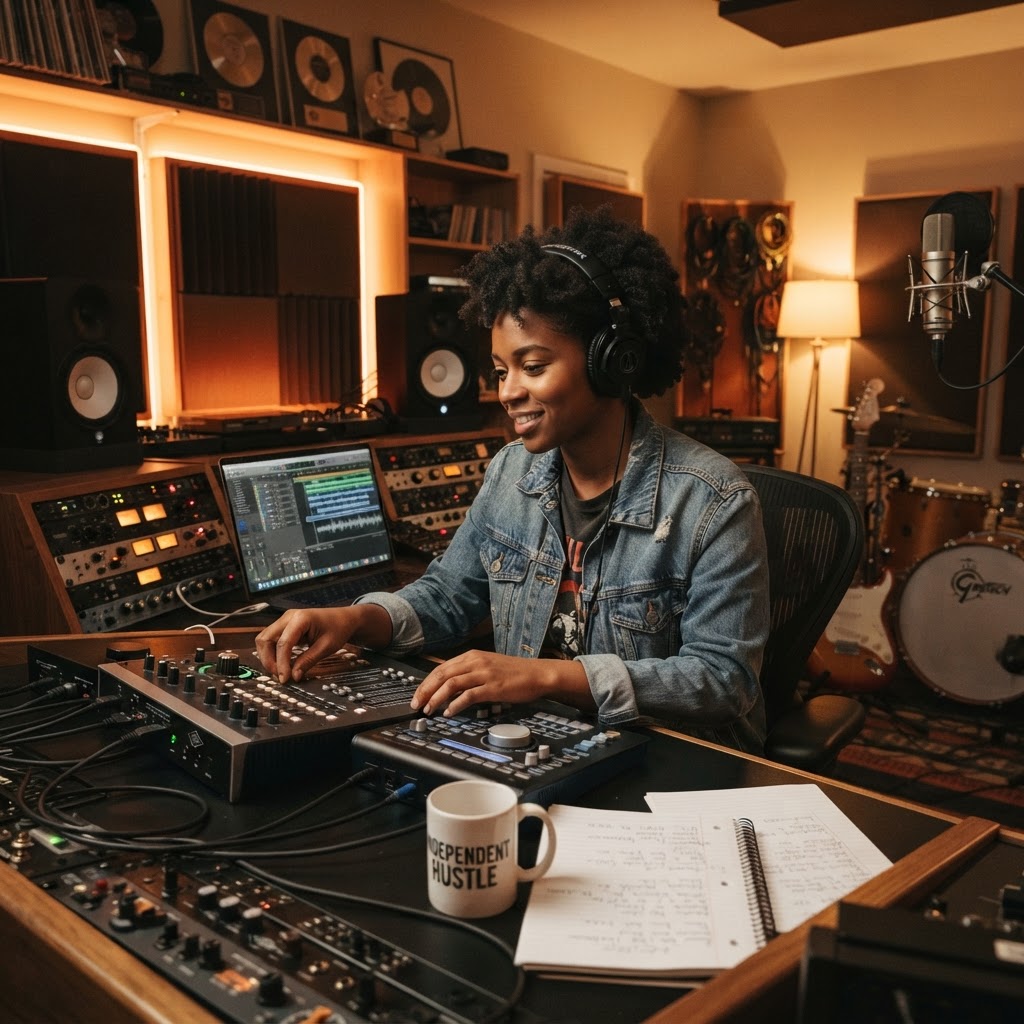
How to Tour as an Independent Musician: The Profitable Pro Blueprint
You have spent thousands of dollars and hundreds of hours writing, recording, and promoting, yet you are staring at an empty calendar and a bank account that doesn't reflect your effort. You are asking yourself how to tour as an independent musician because you are tired of playing empty rooms for "exposure" that never converts into a sustainable career. The frustration is palpable: you know you have the music, but the bridge between digital streams and physical ticket sales feels impossible to build. To succeed, you must move beyond the amateur approach of booking random dates and move into the realm of professional logistics and data-backed touring.
To successfully tour as an independent musician, you must shift your mindset from 'gigging' to 'routing'. Start by mapping a geographic circuit where your Spotify 'Listener' data shows high density. Use SongBiz to pitch local PR outlets for show promotion, launch Meta BOOST campaigns to target ticket buyers within 30 miles of each venue, and leverage SongBiz's grant database to secure tour funding before you ever leave your house. A professional tour isn't a vacation; it is a calculated business expansion that requires rigorous financial oversight and a clear understanding of your audience's movement patterns.
Understanding Why Your Booking Requests Get Ignored
The biggest mistake artists make when trying to figure out how to tour as an independent musician is treating booking agents and club talent buyers like fans. They are not. They are risk managers. When you email a venue with a generic electronic press kit (EPK) and no social proof, they don't see a performer; they see a potential for a dead room and a lost bar night. To secure a date, you need to demonstrate a conversion benchmark of at least 5% of your local digital audience. If you have 1,000 listeners in a city, you must prove that at least 50 of them are willing to pay a $15 ticket price. SongBiz streamlines this by centralizing your PR outreach and playlist data, making it easier to prove your draw to skeptical bookers.
When pitching a venue, your primary goal is to mitigate the booker’s fear of loss. Talent buyers deal with hundreds of emails daily. If your email lacks a "hook"—a specific reason why your performance will put bodies in the building—it will be deleted. You must lead with data: the exact number of local listeners, your historical ticket sales (if any), and your active ad spend. By providing this information upfront, you prove you are a partner in the venue’s success, not just a liability looking for a stage.
How do you prove a 'draw' without having toured before?
Venue buyers prioritize artists who can show they have a 'sticky' audience. Use tools like Chartmetric to pull your listener demographics and show them to the booker. A professional, data-driven pitch increases your response rate from 5% to nearly 30%. Furthermore, mentioning that you are running localized Meta ads—which you can automate using SongBiz's ad management suite—shows the venue you are putting actual capital into filling their room, not just hoping for a miracle. Providing a screenshot of your localized ad campaign reaching 10,000 people in their specific zip code is the strongest social proof you can provide.
Insider Truth: A talent buyer for a 200-cap room cares less about your Spotify monthly listeners than your 'Save Rate' and 'Local Listener' count. If you can't prove 50+ people live in their city, the deal is already dead.
The Economics of Routing: Designing a Sustainable Circuit
Routing is the art of minimizing 'dead miles.' Most independent artists lose money because they drive 8 hours between gigs. Professional tours are designed in loops of 300–400 miles maximum. When learning how to tour as an independent musician, you must prioritize 'anchor dates' in mid-sized markets where you have a streaming cluster. Once the anchor is set, fill the surrounding dates in secondary markets. SongBiz helps you identify these clusters by analyzing where your biggest fans are actually located, allowing you to build a route that maximizes profit per mile.
A profitable route requires a "Hub and Spoke" strategy. Identify your primary market—where you have the highest density of fans—and book your most lucrative date there. Then, branch out in a circular motion, keeping drive times under five hours. This reduces fuel costs and driver fatigue, both of which are hidden "profit killers" for independent acts. If you find yourself driving more than 400 miles between shows, you are likely hemorrhaging capital on gas and labor costs that your performance fees won't recover. Always aim to hit at least three to four mid-sized markets in a single week to maximize the efficiency of your van rental and vehicle maintenance.
Is there a specific budget threshold for a first tour?
Yes. For a debut independent tour, aim for a 'break-even plus 20%' model. Factor in gas ($0.30 per mile), lodging (Airbnb or Couchsurfing/hotels), and a per diem of $30 per person. If your projected venue guarantee does not cover 120% of these costs, do not take the date. You need that buffer for equipment repairs or last-minute van maintenance.
Leveraging Meta Ads to Sell Out Every Venue
The myth that 'if the music is good, they will come' has ended the careers of thousands of artists. Successful touring requires aggressive marketing. You should start your ad campaign exactly 21 days before the show date. Use Meta BOOST to target your genre, but crucially, narrow the audience to a 20-mile radius around the venue. By using high-quality video assets created in the SongBiz AI Content Studio, you can capture attention faster than a static flyer ever could. Aim for a Cost Per Acquisition (CPA) of under $4.00 per ticket sold.
Marketing a tour isn't just about posting on social media; it’s about hyper-local penetration. Your ads should feature the venue name, the date, and a "Call to Action" button that links directly to the ticket portal. Don't waste budget on "Brand Awareness" campaigns. You are in the "Conversion" business. By setting your campaign to trigger only to users who have previously engaged with your Instagram content or who live in a specific zip code, you maximize your ROI. Tracking these sales is vital; if your CPA exceeds $6.00, your marketing strategy is eating your profit, and you must pivot your creative or your audience targeting immediately.
Pitching Press to Build Legitimacy and Venue Confidence
Venue bookers are much more likely to say 'yes' if you have local press coverage already lined up. It validates the booking. Use the SongBiz dashboard to find vetted PR outlets and bloggers in the markets you are visiting. Send a personalized pitch highlighting your upcoming show and your unique fan data. A mention in a local rag can increase ticket sales by 15-20%, which gives you the leverage to ask for a higher guarantee next time. Consistent PR outreach is how you build a reputation, not just a one-off gig.
When pitching, avoid the "generic blast" approach. Journalists in specific cities care about their readers. Frame your pitch around how your music fits their local scene or why the venue is the perfect stage for your specific sound. Mention that you have already secured ad spend to support the show—this proves to the outlet that the event will be well-promoted and that their mention will lead to actual ticket sales. Journalists prefer writing about artists who show signs of professionalism and momentum; make sure your press release includes a high-resolution press folder with a professional headshot, a bio that highlights touring history, and a link to your best-performing live video.
Insider Truth: Most local music blogs are desperate for content. If you send a professional press release with high-res assets and a compelling tour hook 4 weeks out, your placement rate will exceed 40%.
Securing Grant Funding for Independent Tours
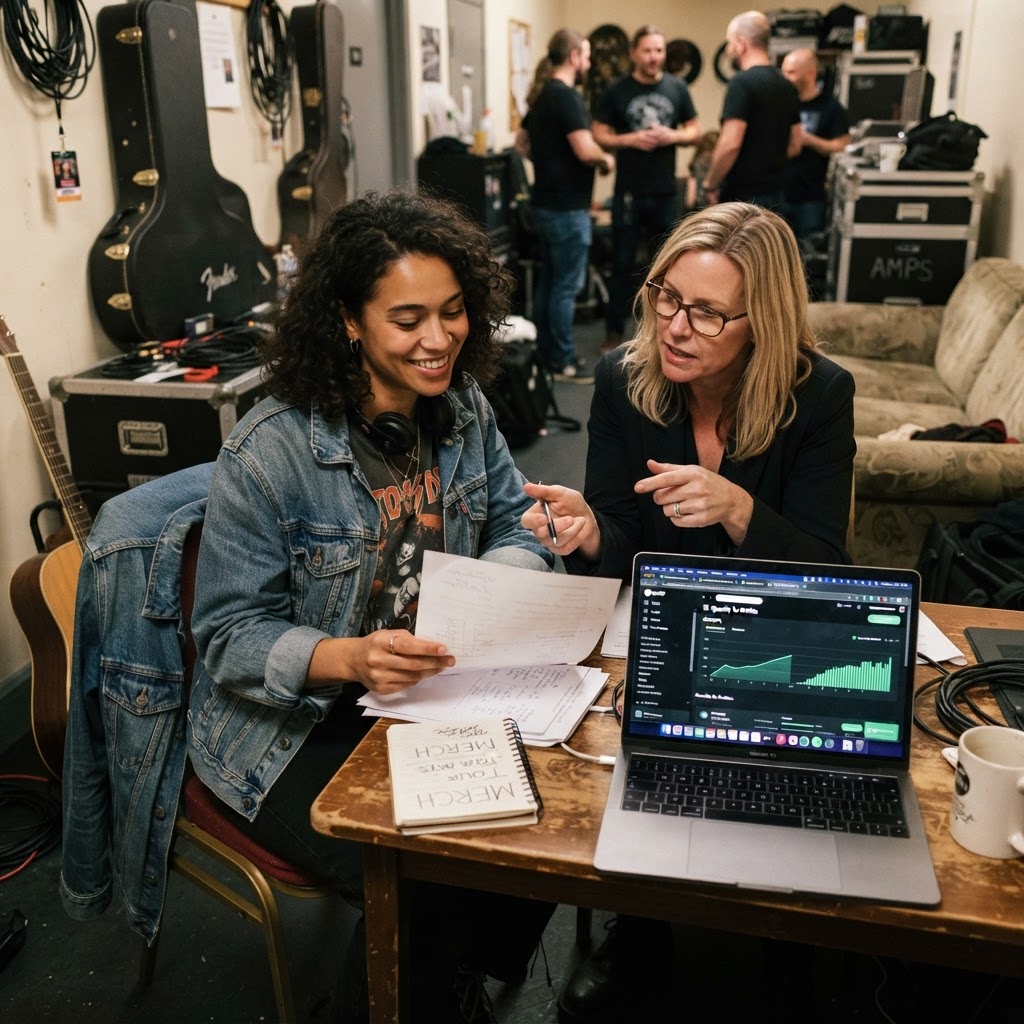
SongBiz for Artists
Pitch your music to vetted curators and PR outlets — all in one platform
SongBiz handles playlist pitching, press outreach, booking, grant funding, and AI content creation so you can focus on making music. No label required. Start free and launch your first campaign in minutes.
Start free with SongBiz →The most successful artists rarely pay for their tours entirely out of pocket. They use grants. Governments and private foundations offer thousands in 'touring support' that many artists simply ignore because they don't know where to look. SongBiz features a regularly updated grant database specifically for musicians. Securing just one $2,000 grant can transform your tour from a financial nightmare into a profitable marketing investment. Make sure your application emphasizes the professional development aspect—how this tour helps you reach a wider demographic and scales your fanbase.
Grant applications require a detailed budget. When applying, be transparent about your expenses and clearly articulate the "Return on Investment." Are you using these funds to reach a new region? Are you filming content to support future growth? Are you creating jobs for sound engineers or merch managers? Foundations love to fund projects that have a clear, measurable outcome beyond just "traveling." A successful grant submission includes a timeline, a marketing strategy, and an honest assessment of how the funding will accelerate your professional trajectory.
Mastering the Merchandise Hustle
You cannot rely on ticket revenue alone to survive on the road. Merchandise is the lifeblood of the independent touring artist. When figuring out how to tour as an independent musician, you must treat your merch table as a retail storefront. A 30% conversion rate—meaning 30% of your attendees purchase an item—is the gold standard. To achieve this, you need a mix of price points: a $5 sticker/pin, a $25–$30 shirt, and a premium $50 item like a vinyl record or a hoodie.
Always accept card payments through a reliable POS system like Square or Shopify. Cash-only tables are archaic and leave money on the table. Furthermore, ensure your merch display is well-lit and that your items are displayed clearly. Many artists find success by bundling a ticket and a shirt for a slight discount, or by offering a "tour exclusive" variant that fans cannot get online. Your merchandise should be curated to reflect the specific aesthetic of your tour, turning a transaction into a souvenir that acts as a walking billboard for your brand long after the show has ended.
The "Show-Day" Professionalism Benchmark
Once you secure the gig, your professionalism on the day of the show determines whether you are invited back. Arrive early for load-in, respect the sound engineer, and stick to your set times with surgical precision. A band that ignores their set time forces the venue to scramble to get back on schedule, which creates friction with the venue management and the other acts on the bill. If you are the opener, finish exactly when the booker expects you to finish. If you are the headliner, engage the audience without rambling. Efficiency and respect make you a "low-maintenance, high-reward" act—the kind of artist that bookers will prioritize for future, higher-paying dates.
People Also Ask
What is the minimum number of local listeners I need to book a venue?
For a small club of 100–150 capacity, you should aim for at least 300–500 active listeners within a 50-mile radius of the venue. You need to convert 10-15% of that audience to make a successful, profitable night. Always use your data to back up your pitch.
How do I negotiate a guarantee instead of just door deals?
A 'guarantee' is only given to artists who show they have built a fanbase. You negotiate by sharing your previous event success stats and current engagement numbers. If you don't have a track record, ask for a 'door split' that starts at 70% in your favor, provided you cover all promotional costs. Never agree to a 50/50 split unless you have a massive following.
What should be in my press kit when emailing venue bookers?
Include a link to your EPK (or a SongBiz-generated profile), a 30-second highlight video of a live performance, links to your top three tracks, and a list of press coverage you have received. Keep the email under 150 words; busy bookers scan for information, they don't read biographies.
How do I manage tour expenses without going broke?
Track every dollar in a simple spreadsheet, but prioritize the 'big three': gas, food, and lodging. Use 'GigSwap' or similar networks to trade shows with other independent artists, allowing you to share the cost of promotion and lodging in different cities. Never ignore the power of a local sponsor to cover your hotel costs in exchange for exposure.
What is the most effective way to handle venue bar-minimums?
Many venues will ask you to guarantee a certain amount of bar sales. If you have a younger audience, be cautious. Offer to promote the event specifically to your 21+ following, and use your mailing list to emphasize the drink specials. If you can't meet the bar minimum, negotiate for a lower guarantee or provide additional promotional support, like hosting a pre-show event to drive early traffic.
Finalizing Your Touring Infrastructure
Touring is a grind, but it is a grind that can be optimized through systems and data. By integrating SongBiz tools into your daily workflow, you remove the guesswork from your career. Start with your streaming data, map your circuit logically to minimize overhead, use localized ads to guarantee attendance, and leverage PR and grants to offset your costs. When you treat your music career like a business, the empty rooms will fill, the bank account will stabilize, and the dream of touring as a profitable, professional artist will become your reality. Success in this industry is rarely about luck; it is about the consistent application of professional standards to every facet of your tour.
Build your music career without a label
Join thousands of independent artists using SongBiz to get playlist placements, press coverage, booking deals, and grant funding — all from one platform. Start free today.
SongBiz Professional — Pitch. Press. Play. The all-in-one music marketing platform for independent artists. Playlist pitching, PR outreach, booking, grant funding, and AI content creation. Start free →