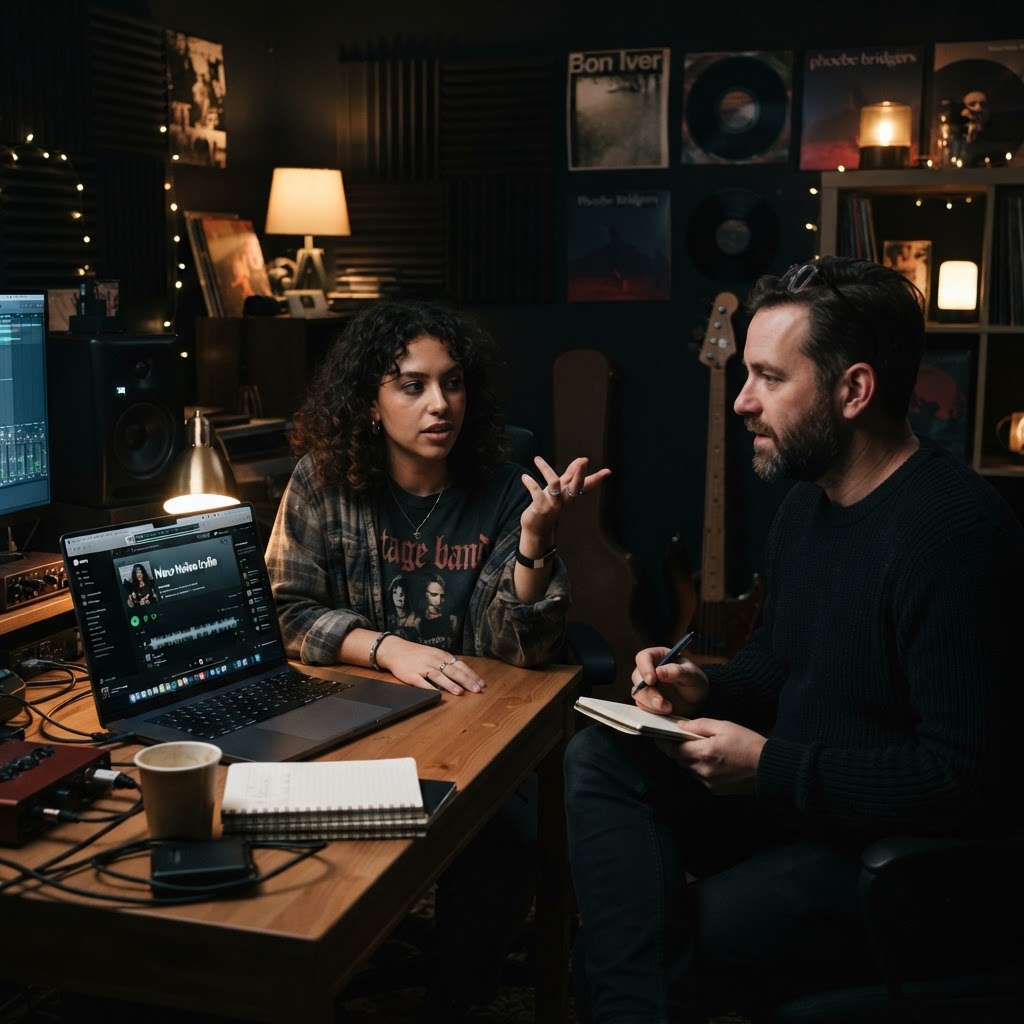
How to trigger Spotify algorithmic playlists
You have just finished your latest track, spent thousands on production, and uploaded it to Spotify—only for it to be met with total silence. If you are wondering how to trigger Spotify algorithmic playlists like Discover Weekly or Release Radar, you are not alone; most independent artists fail because they treat Spotify like a social media platform rather than a data-driven engine. To trigger algorithmic growth, you must prioritize listener retention metrics over vanity follower counts. Achieving this requires a 70% skip-rate threshold or lower, an average save-to-stream ratio of at least 15%, and high session-time engagement. By feeding the algorithm consistent, high-quality listener data, you signal that your track deserves to be served to a wider audience, moving your music from stagnant release cycles to organic, automated growth.
Understanding the Mechanics: How to Trigger Spotify Algorithmic Playlists Effectively
The Spotify algorithm is not a curator; it is a collaborative filtering machine designed to keep listeners on the platform for as long as possible. When you ask how to trigger Spotify algorithmic playlists, you are essentially asking how to prove to a machine that your song provides better retention than the one currently playing. The algorithm tracks three primary data points: the 30-second skip rate, the 'save' rate, and the 'profile visit' rate. If listeners skip your track within the first 30 seconds, the algorithm deems your content low-quality and cuts distribution. If they save the song to their personal library or repeat the track, the algorithm views your music as 'sticky,' which is the single most important factor for triggering algorithmic placement.
Pro Truth: The algorithm does not care how many followers you have; it cares how many of those followers actually listen to the end of the song. A loyal fanbase of 500 listeners who complete your tracks is worth more than 50,000 bots or passive listeners who skip at 25 seconds.
How to Trigger Spotify Algorithmic Playlists Through Listener Retention
To master how to trigger Spotify algorithmic playlists, you must optimize your song structure to retain listeners. Industry benchmarks suggest that you should aim for a skip rate of less than 25%. This means your song must be engaging from the first three seconds—the "hook" is no longer just for the chorus; it is for the intro. Use the SongBiz AI Content Studio to generate high-performing visual assets that match your sonic aesthetic, ensuring that when you drive traffic from Meta ad campaigns to Spotify, your visual brand matches the music and reduces drop-off rates. Deep analysis reveals that "intro-heavy" songs, or those with long, atmospheric soundscapes, often suffer from higher skip rates during the first 15 seconds. If you want algorithmic growth, consider the "Radio-Ready" structure: get to the melodic core within 10 seconds.
What is the minimum stream count needed to trigger Discover Weekly?
There is no "magic number" of total streams, but there is a "velocity threshold." The algorithm looks for a sustained increase in daily active listeners over a 7-day period. To trigger Discover Weekly, aim for a minimum of 500 to 1,000 unique listeners per week with a save rate above 10%. This velocity tells Spotify that your music is gaining real-world traction, prompting them to move your track into the "Discover Weekly" engine for similar listeners.
How do algorithmic clusters determine if my song is "similar" to others?
Spotify uses "acoustic fingerprinting" and collaborative filtering. It analyzes the raw audio frequency data, tempo, and key, then maps it against your listeners' behavior. If your fans also listen to Artist X, the algorithm clusters you together. You trigger this by ensuring your target audience is narrowly defined, allowing the machine to learn your "sonic signature" rapidly.
Why Pitching to Vetted Curators is Crucial for Data
Many artists wonder how to trigger Spotify algorithmic playlists while ignoring the power of curated playlists. Curated placements act as "seed data." When you pitch to vetted curators via the SongBiz platform, you are not just hunting for streams; you are hunting for "qualified listeners." When your music is placed on a curated list, the algorithm observes how those listeners interact with your track. If that playlist is highly relevant to your genre, the listener data collected there feeds back into your "Artist Profile" data, drastically increasing your chances of triggering algorithmic placement. A placement on a playlist with 1,000 active listeners who have a high affinity for your genre is exponentially more valuable than a placement on a "mega-playlist" filled with passive, low-intent listeners who shuffle past your track.
How can SongBiz simplify the PR and pitching process?
SongBiz serves as an all-in-one platform for independent artists. By using the dashboard to pitch to vetted Spotify curators and PR outlets, you ensure your music is heard by taste-makers who can provide the initial "seed streams" necessary to trigger algorithmic recognition. Without a label, this level of access was previously impossible; now, you can manage your entire PR and pitching strategy in one place, reducing the friction that often kills an artist's momentum.
Leveraging Meta BOOST for Algorithmic Seeding
If your organic reach is stalled, you must use targeted advertising to force the algorithm to take notice. The strategy for how to trigger Spotify algorithmic playlists often involves running Meta BOOST campaigns that target hyper-specific micro-genres. When you run a music-optimized ad campaign, you are essentially purchasing "intentional listening sessions." Because these listeners come from your target demographic, they are statistically more likely to "save" your song, which is the exact signal the algorithm needs to begin triggering automated recommendations. Furthermore, when running these ads, optimize your "Conversion API" settings. Tracking specific conversion events—like "Play" or "Save"—provides Meta and Spotify with the feedback loops required to optimize for quality over quantity, further protecting your skip-rate metrics.
Pro Truth: Never run ads to a broad audience. Targeting a niche, such as "bedroom pop" or "experimental lo-fi," ensures the algorithm learns your exact listener profile, preventing your music from being tagged with irrelevant genre markers.
The Role of 'Saves' and 'Profile Visits' in Algorithmic Success
The Spotify algorithm prioritizes users who exhibit high intent. A 'Save' is a high-intent action. When a listener adds your track to a personal library, the algorithm effectively flags that user as a potential "super-fan." When you release your next track, the algorithm will automatically prioritize that user's Release Radar to include your new music. This is the foundation of the "Release Radar flywheel." To grow this, you must explicitly ask your fans to save your tracks during the release week, using the data you gather from your Spotify for Artists dashboard to identify which regions and demographics are your strongest. Analyzing these geographic hotspots allows you to double down on ad spend in specific cities where your "save rate" is already high, creating a self-sustaining momentum cycle.
How do I know if my algorithmic reach is actually growing?
Monitor your 'Source of Streams' in the Spotify for Artists dashboard. If you see the percentage of 'Algorithmic' streams increasing while your 'Direct' or 'Editorial' streams stay flat, you have successfully triggered the algorithm. Aim for a 20-30% algorithmic share within the first 60 days of a release campaign to confirm your music is sticking.
Optimizing Your Profile for the Long Game

SongBiz for Artists
Pitch your music to vetted curators and PR outlets — all in one platform
SongBiz handles playlist pitching, press outreach, booking, grant funding, and AI content creation so you can focus on making music. No label required. Start free and launch your first campaign in minutes.
Start free with SongBiz →The final step in understanding how to trigger Spotify algorithmic playlists is profile optimization. Spotify rewards artists who keep their profile updated. This includes high-resolution artist images, an engaging "About" section, and a clear "Artist Pick." When a listener clicks your profile after hearing your song on a playlist, the algorithm records this as a positive interaction. If they stay on your page to explore other tracks, you increase your "session time," which is the golden metric for the Spotify backend. Furthermore, leverage the "Canvas" feature for every track. Studies show that tracks with looping Canvas videos see a 20% increase in share rates and a higher propensity for listeners to click through to the artist profile, directly fueling your session-time statistics.
Strategic Execution: A Checklist for Success
- Step 1: Release music consistently every 6-8 weeks to keep the algorithm "warmed up."
- Step 2: Use Meta BOOST to drive high-intent listeners to your track within the first 48 hours of release.
- Step 3: Encourage your core audience to "save" the track to their personal library via pre-save campaigns.
- Step 4: Use SongBiz to identify curators who match your specific micro-genre for initial high-quality seed streams.
- Step 5: Review your Spotify for Artists 'Source of Streams' data weekly and pivot your ad spend based on which tracks are getting the lowest skip rates.
- Step 6: Update your "Artist Pick" on Spotify for Artists every time a new track drops to ensure you are cross-promoting your entire catalog.
- Step 7: Optimize your song metadata (ISRC/UPC codes) to ensure your music is correctly identified in genre-specific editorial databases.
- Step 8: Engage with your community via the "Artist Activity" tab to maintain high-intent traffic to your profile.
Deep-Dive Metrics: What Really Moves the Needle?
While industry advice often focuses on getting as many streams as possible, that is a superficial approach. The real game is about "listener conversion." For every 100 listeners who engage with your track, you want to see a specific percentage transition from "casual listener" to "follower." This conversion threshold—typically 5% for emerging artists—is a massive red flag or green light for the algorithm. If your conversion rate is low, the algorithm will deprioritize you, regardless of your total stream count. You can increase this by ensuring your "About" section includes a call to action, and by utilizing the "Merch" and "Concerts" tabs to create a multi-dimensional brand presence that keeps the listener engaged even after the track ends.
The "Release Radar" Flywheel Strategy
The Release Radar is the most powerful tool for an independent artist because it targets people who have already shown interest in your work. To maximize this, you must train your listeners to engage with your profile. The algorithm tracks whether users who listen to your Release Radar move on to listen to your *other* tracks. If they do, your "Global Popularity" index rises. This index is a closely guarded Spotify internal metric that dictates how many people are shown your music in "Radio" and "Autoplay" features. Focus on building a cohesive sonic identity across your last three releases, as the algorithm uses this "cluster" to determine if you are ready for a larger, algorithmic rollout.
FAQ: People Also Ask
Do playlist followers matter for algorithmic placement?
Followers matter less than active listeners. A playlist with 10,000 followers and zero active engagement is "dead weight" and can hurt your algorithmic chances if the algorithm detects low interaction. Focus on playlists with high "Save" and "Repeat" rates rather than large follower counts.
Does the length of my song affect algorithmic performance?
Yes. The algorithm favors tracks that are completed. If your song is over 4 minutes, ensure the arrangement is dynamic enough to prevent skipping. Shorter, high-impact songs (2:30–3:15) often perform better for initial algorithmic triggers because they boast higher completion rates.
How soon after a release should I see algorithmic activity?
You should see preliminary algorithmic data within 7-10 days of your release. However, the true "trigger" usually happens around the 21-day mark, after the algorithm has had enough time to aggregate data from your initial listeners and compare your music to similar artists.
Can I "cheat" the algorithm with automated streams?
Never. Artificial streaming services will get your track flagged or removed, and they will permanently damage your "Artist Profile" standing in the eyes of Spotify’s data systems. The algorithm is built to detect irregular listening patterns; use legitimate strategies like SongBiz ad campaigns instead.
How do I maintain my algorithmic standing after a successful release?
Consistency is key. The algorithm has a "recency bias." If you go silent for 6 months, your relevance score drops. Use the SongBiz editorial calendar to plan your release cycle so that you are active at least every quarter, ensuring your "Release Radar" audience remains engaged and your internal popularity score remains high enough for sustained algorithmic support.
Build your music career without a label
Join thousands of independent artists using SongBiz to get playlist placements, press coverage, booking deals, and grant funding — all from one platform. Start free today.
SongBiz Professional — Pitch. Press. Play. The all-in-one music marketing platform for independent artists. Playlist pitching, PR outreach, booking, grant funding, and AI content creation. Start free →