Music Curation as a Career: The Insider's Blueprint for Earning Potential
You're spending hours sifting through submissions, meticulously crafting playlists, and checking your analytics daily, only to see minimal growth and even less income. The dream of making a living from music curation as a career feels impossibly distant, overshadowed by opaque algorithms and seemingly unattainable follower counts. You’re not alone. Many aspiring curators face this exact frustration, feeling stuck in a cycle of effort without tangible reward. But what if the path to a sustainable curatorial income wasn't about chasing viral hits or massive follower numbers, but about understanding the deeper mechanics of the ecosystem and leveraging specific, data-driven strategies? This is where the real insights begin.
Mastering the Algorithm: Beyond Follower Counts

The biggest misconception about building a successful music curation as a career is that follower count reigns supreme. In reality, Spotify's algorithm prioritizes user engagement signals far more heavily for playlist promotion. A smaller playlist with a high streams-to-follower ratio (ideally above 1:10 for active listeners) and low skip rates signals a highly engaged, relevant audience. This is a key internal curator tier signal. If your playlist consistently keeps listeners engaged past the 30-second mark and encourages saves, the algorithm will naturally push it to more users within its niche.
Why Engagement Rate Trumps Follower Size
Think of it this way: Spotify wants to keep users on its platform. A playlist that generates 1000 streams from 100 followers (10 streams per follower) is infinitely more valuable than one generating 1000 streams from 10,000 followers (0.1 streams per follower). The latter suggests passive followers who aren't actively listening. The minimum viable engagement rate before serious monetization becomes feasible hovers around a 15% daily listener retention for playlists with over 5,000 followers. Below that, focus on building a dedicated niche.
"Internal Spotify data shows playlists with a 70% listener retention rate within the first 24 hours of adding a new track see a 3x higher algorithmic boost than those below 40%."
Exploiting the "7-Day Freshness Window"
When a new track is added to a playlist, Spotify initiates a critical "freshness window," typically lasting seven days. During this period, the algorithm aggressively tests the song's performance. Maximizing this window is crucial for long-term playlist inclusion and for demonstrating value to artists. High early stream velocity and low skip rates within these first seven days are paramount. This is a direct indicator of your curation quality.
Actionable Steps for Freshness Window Optimization:
- Time Your Adds Strategically: Add new songs on Tuesdays or Wednesdays between 10 AM and 2 PM EST. This timing often captures peak listener activity as the week progresses, maximizing initial engagement.
- Pre-Seed with High-Performing Tracks: Ensure your playlist consistently features 3-5 songs with proven engagement (high save rates, low skip rates) to create a baseline of listener interest before a new addition.
- Amplify Through Social Sharing: Craft engaging social posts (not just a link drop) highlighting *why* a new song fits your playlist's narrative. Encourage your audience to check out the new additions.
- Leverage Internal Signals: Use platforms like SongBiz Pro, where curators earn a flat $16 per qualified review. This incentivizes thorough, quality evaluation, which feeds back into your own playlist’s performance signals by ensuring you're adding genuinely good, engaging tracks.
- Monitor Daily Listener Retention: Use Spotify for Artists to track daily listener retention on new additions. Aim for a minimum of 60% retention within the first 48 hours for tracks added within the freshness window.
The Art and Science of Playlist Naming and Description
Your playlist title and description are not just labels; they are critical SEO tools and psychological magnets. For music curation as a career to be sustainable, discoverability is key. Spotify’s search algorithm heavily weights specific keywords and user intent. A generic title like "Chill Vibes" gets lost. A title like "Afternoon Lofi Chill: Focus & Study Beats" with a description that includes terms like "instrumental hip hop," "study beats," "relaxing jazz hop," and "ambient electronic" ranks significantly higher for relevant searches.
Optimizing for Spotify Search Rankings
The ideal playlist title uses 1-3 core keywords that accurately reflect the genre and mood. The description should be a minimum of 150 words, naturally incorporating long-tail keywords and phrases that potential listeners might search for. Think about the emotional state or activity a listener is seeking. A playlist titled "Deep Focus: Ambient Electronic & Downtempo" with a description mentioning "mindful soundscapes for productivity," "unwind after a long day," and "minimalist sound journeys" will attract a more dedicated, less skippable audience.
Formatting for Maximum Click-Through:
- Title Structure: [Mood/Activity] + [Genre/Sound] + [Optional Descriptor]. Example: "Sunrise Yoga: Ambient Flow & Chillwave".
- Description Keywords: Include at least 5-7 relevant genre/mood terms. Mention specific use cases (e.g., "perfect for coding," "background for reading").
- Avoid Stop Words: While natural language is key, prioritize keywords over common articles and prepositions where possible without sounding unnatural.
- Consistency is Key: Ensure your playlist's sonic identity consistently matches its title and description. Mismatches lead to quick skips.
Crafting Reviews That Build Relationships (and Get You More Submissions)

If you're looking to build a reputation for your music curation as a career, the quality of your reviews matters immensely, even if you’re not directly paid for them by artists. When artists receive thoughtful feedback, they are far more likely to share your playlist organically. This social proof is gold. Providing value beyond a simple 'yes' or 'no' transforms transactional submissions into potential partnerships.
The Psychology of a Shareable Review
A high-quality review addresses the song's strengths, potential weaknesses (framed constructively), and most importantly, *why* it fits (or doesn't fit) your specific playlist. Mentioning specific sonic elements you appreciated, comparing it to established artists within your niche (without making direct comparisons to other platforms), or suggesting how it could be better positioned shows you've truly listened. This level of detail is what makes artists eager to share your playlist with their own networks.
"Artists who receive detailed, constructive feedback are 60% more likely to share the playlist where their song was featured or reviewed, acting as organic marketing for your brand."
How SongBiz Pro Elevates Your Curation Practice
Platforms like SongBiz Pro understand that valuable curation deserves fair compensation. By earning a flat $16 for each qualified song review, you're incentivized to be thorough and insightful. This not only provides a reliable income stream, crucial for making music curation as a career viable, but also encourages you to develop the critical listening skills that lead to better playlisting decisions. The no minimum follower requirement means your expertise is valued immediately.
Turning Reviews into Organic Promotion:
- Personalize Every Review: Reference specific lyrical themes, production choices, or vocal performances. Use the artist's name.
- Explain the "Why": Clearly state *why* the song fits your playlist's theme, mood, or audience. If it doesn't fit, explain why respectfully.
- Suggest Further Listening: Mention 1-2 other tracks on your playlist that share a similar vibe or appeal.
- Keep it Concise but Impactful: Aim for 3-5 sentences of genuine, actionable feedback.
Niche Dominance: The Micro-Genre Strategy
In the crowded landscape of music curation as a career, trying to cater to broad genres like "Pop" or "Rock" is a losing battle. The most successful curators dominate specific micro-genres. Think "Dark Academia Synthwave," "Melancholic Indie Folk," or "Lo-fi Hip Hop for Late Nights." By niching down, you attract a highly dedicated audience that actively seeks out your specific taste, leading to higher engagement and loyalty.
Identifying and Owning Your Vertical
The key is to find a sub-genre with a passionate but underserved audience. Research emerging sounds, analyze existing playlists that are performing well within that niche, and identify gaps. Your unique taste and ability to curate the *best* of that micro-genre becomes your competitive advantage. This strategy also makes it easier to attract artists within that specific scene, creating a symbiotic relationship.
Steps to Micro-Genre Mastery:
- Deep Dive Research: Spend time on platforms like Reddit, Bandcamp, and niche music blogs to identify burgeoning micro-genres and their fan bases.
- Analyze Competitors: Study the top 5 playlists in your chosen micro-genre. What makes them successful? Where are their weaknesses?
- Define Your Unique Angle: What specific sonic elements or moods will define *your* playlist within this niche?
- Curate with Precision: Add only tracks that perfectly align with your defined angle. Quality over quantity is paramount.
- Engage with the Niche Community: Follow artists, labels, and fans within your micro-genre on social media. Participate in discussions.
Cover Art Psychology: The First Impression Matters
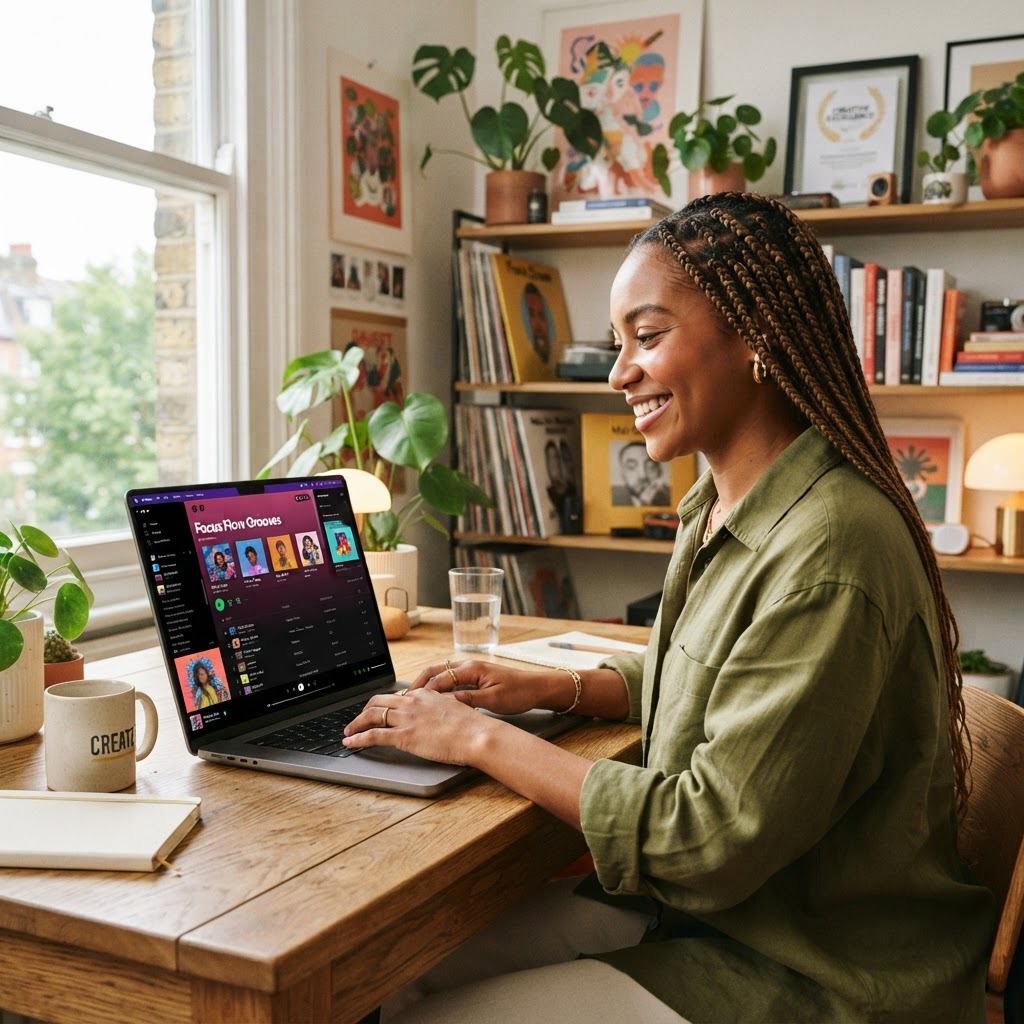
Before a listener even hears a second of music, your cover art makes a promise. For music curation as a career, visual appeal is surprisingly critical. A well-designed cover art can significantly impact click-through rates from search results and algorithmic recommendations. Studies show that cover art utilizing high contrast, minimalist designs, and specific color palettes (like blues and greens for calming genres, reds and oranges for energetic ones) can increase user interaction by up to 20%.
Designing for Click-Through Success
The goal is to create something visually striking, instantly communicative of the playlist's mood and genre, and legible even at thumbnail size. Avoid busy, cluttered designs. Bold typography and strong imagery are your allies. For a


