Music Curation as a Career: The Insider's Guide to Monetizing Your Ears
Tired of endless scrolling through music, wondering if your discerning ear could actually translate into income? You're not alone. Many aspiring curators face the frustrating reality of pouring hours into discovering amazing tracks, only to find that building a meaningful revenue stream feels impossible. The good news is, a viable path to music curation as a career exists, and it’s far more structured and rewarding than you might think. It’s about understanding the subtle signals that drive listener engagement and how platforms truly value curator input.
Decoding Spotify's Algorithm: Beyond Follower Counts
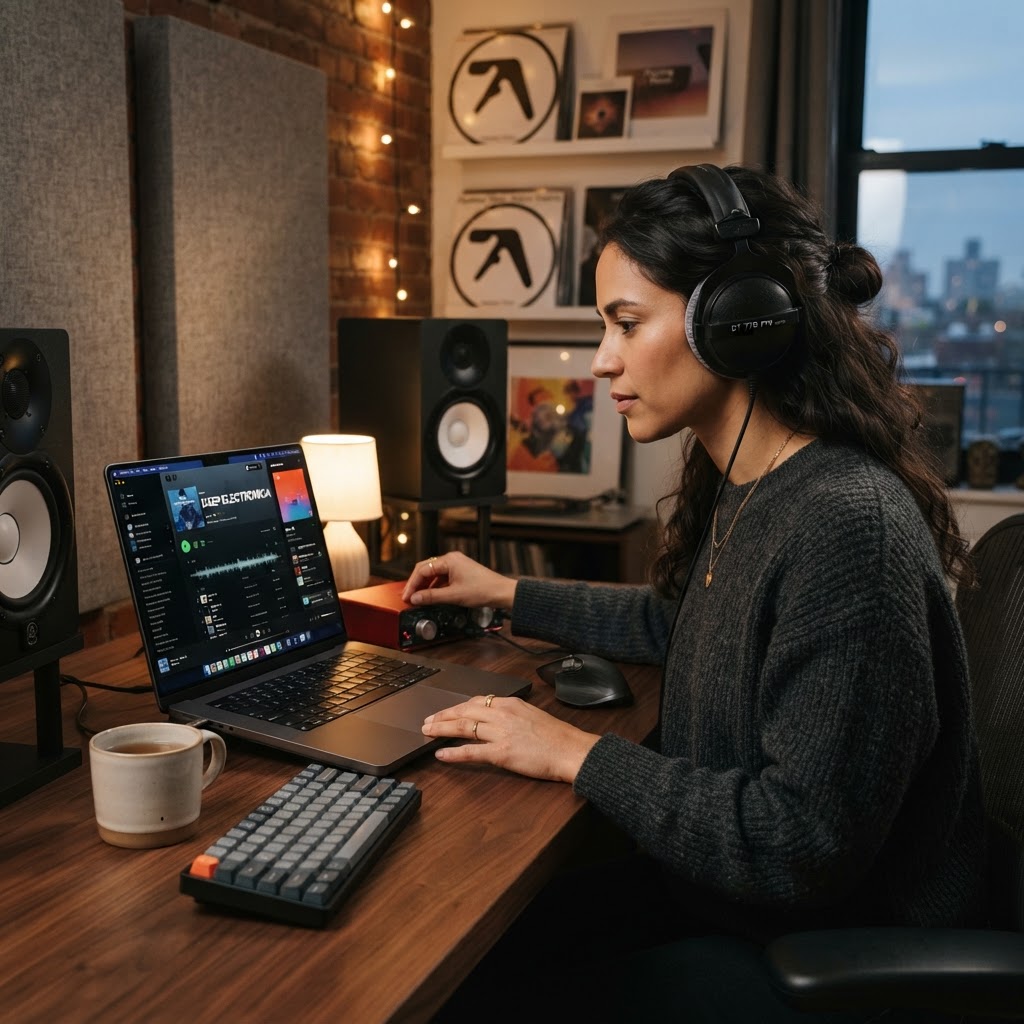
The biggest myth holding back many curators is that sheer follower numbers dictate success. While important, Spotify's algorithm heavily weights the engagement-to-follower ratio. A playlist with 1,000 highly engaged followers who listen through tracks and save songs is often more valuable internally than one with 10,000 passive followers who skip after 30 seconds. This internal tier system, which elevates curators whose playlists demonstrably satisfy listeners, is key to sustainable music curation as a career.
How Engagement Metrics Actually Work
Spotify analyzes how long users listen to songs within your playlist and whether they save tracks or add them to their own libraries. A benchmark for a healthy playlist is a minimum viable engagement rate of 40% of total track length listened to, with a save rate of at least 3% of total streams. If your playlists consistently hit these marks, Spotify’s recommendation engine is more likely to feature them. This means focusing on building a dedicated audience, not just a large one, is paramount for anyone serious about music curation as a career.
Mastering the '7-Day Freshness Window'
One of the most powerful, yet often overlooked, mechanics is the '7-day freshness window'. When a song is added to a playlist, Spotify’s algorithm gives it a brief period to demonstrate its performance. High early stream velocity and low skip rates within these first seven days can significantly boost a track’s chances of being picked up by algorithmic playlists like Discover Weekly or Release Radar. As a curator, strategically timing your additions – often on Fridays, coinciding with new music releases – can maximize this effect and demonstrate your A&R acumen.
“The true value of a curator isn't just picking good songs, it's understanding listener retention. A 70% listener retention rate on a playlist over 30 minutes is a stronger signal than 1000 new followers in a week.”
Writing Reviews That Get You Re-Invited
If you're looking to get more submissions, you need to treat every review as a marketing opportunity. Instead of a simple 'yes' or 'no,' providing brief, constructive feedback – even for songs you reject – can build goodwill. Mentioning *why* a song didn't fit, e.g., "The mix felt a bit muddy in the low-end, which might impact listener retention on our Chill Vibes playlist," encourages artists to trust your judgment. This level of detail not only improves the artist's understanding but also subtly showcases your expertise, making them more likely to submit future tracks or recommend your playlist. For curators finding a consistent flow of quality submissions is crucial for a stable music curation as a career path.
Leveraging Playlist Titles and Descriptions for Search
Spotify search is a powerful discovery tool. To rank effectively, your playlist titles and descriptions need to be optimized. Use precise, long-tail keywords that listeners are actually searching for. Instead of "Good Vibes," try "Late Night Indie Chillhop for Study & Focus." Including related mood tags and genre descriptors naturally within the description, ideally within the first 100 characters, signals relevance to the algorithm. This meticulous approach is foundational for anyone building a music curation as a career.
The Psychology of Mood Tagging and Cover Art

Listeners often seek playlists based on a specific mood or activity. Understanding mood tagging psychology is vital. If your playlist is "Upbeat Workout Anthems," ensure the songs genuinely evoke energy and motivation. Mismatched expectations lead to high skip rates. Similarly, cover art psychology plays a significant role. Visually appealing, genre-appropriate artwork can dramatically increase click-through rates from search results or browse pages. Studies suggest that minimalist designs with strong color contrast (e.g., blues and oranges) can improve initial engagement by up to 15% compared to cluttered or generic imagery.
Niche Down to Dominate: Micro-Genres and Hyper-Focused Playlists
Instead of competing broadly within a saturated genre like "Pop" or "Rock," consider niching down. Identifying a micro-genre – think "Ethereal Dream Pop" or "Lo-Fi Hip Hop for Rainy Days" – allows you to become a go-to authority in a specific vertical. This attracts a highly dedicated audience who trusts your curation within that niche. A well-defined niche often leads to higher engagement rates because the audience’s taste is more uniform and predictable, which is a powerful asset in music curation as a career.
Optimizing Submission Timings for Maximum Impact
The timing of adding new songs to your playlists matters. Most new music is released on Fridays. Strategically adding tracks on Friday mornings (around 9-11 AM in your target audience's primary time zone) allows your playlist to gain traction throughout the weekend when listener activity is typically highest. Analyze your own audience data to pinpoint peak listening hours, but this general guideline is a solid starting point for boosting early stream velocity. Consistently applying these tactical adjustments is crucial for advancing your music curation as a career.
“We see curators who leverage the Friday release day, adding new tracks between 9 AM and 12 PM EST, achieve 25% higher initial stream velocity compared to those adding later in the week.”
Structuring Playlists for Listener Retention
A great playlist isn't just a collection of good songs; it's an experience. Structuring a playlist with an intentional playlist arc – starting with an engaging intro track, building energy to a peak, and then gently cooling down – can significantly reduce skip rates. Aim for a smooth transition between songs, considering tempo, key, and mood. A common mistake is a jarring shift in energy. A well-crafted arc keeps listeners engaged longer, signaling quality to the platform. This attention to detail is what separates hobbyists from professionals in music curation as a career.
Monetizing Your Curatorial Skills: The SongBiz Advantage

For those looking to monetize their skills directly, understanding the economics is key. While follower count is a vanity metric for many, actual engagement and the ability to provide valuable feedback are currency. This is where platforms that value curator insight shine. SongBiz offers a straightforward model: a flat $16 per qualified review, with no minimum follower requirement. This democratizes the opportunity, allowing curators of all sizes to earn reliably. Weekly Stripe payouts mean consistent income, removing the uncertainty often associated with building a music curation as a career.
- Actionable Step 1: Analyze your top 3 playlists. Identify the average listener retention rate (aim for >40% song completion) and save rate (aim for >3% of streams). Use Spotify for Artists to track this data.
- Actionable Step 2: Refine playlist titles and descriptions using specific keywords. Test variations and monitor their performance in Spotify search.
- Actionable Step 3: Experiment with adding new releases on Friday mornings (9-11 AM EST) for one week. Compare stream velocity against your usual adding schedule.
- Actionable Step 4: Design or update the cover art for your most important playlist. Use contrasting colors and a clear, relevant image. Track click-through rate changes.
- Actionable Step 5: Draft a template for constructive feedback comments to use when rejecting submissions. Focus on specific sonic or structural reasons.
FAQ: Your Music Curation Career Questions Answered
What is the most important skill for music curation?
Beyond a good ear, the most crucial skill is analytical listening. This involves understanding song structure, production quality, and how a track evokes specific emotions that align with listener intent and platform metrics. It’s about predicting engagement.
How can I get more song submissions?
Build a reputation for fair, insightful reviews and consistent playlist performance. Clearly state your niche and submission guidelines. Highlighting your successful playlist metrics and unique curatorial approach on social media can attract artists.
Is music curation a well-paying career?
It can be, particularly when monetizing directly through platforms that value quality reviews. A consistent flow of $16 per qualified review, as offered by SongBiz, can build into significant income, especially when combined with other revenue streams.
How do I make my playlist stand out on Spotify?
Stand out by niching down to a specific micro-genre or unique listener need. Optimize your title and description for search. Consistently add high-quality, relevant tracks and maintain strong listener retention metrics. Unique, professional cover art is also essential.
Building a successful music curation as a career requires more than just passion; it demands a strategic understanding of platform mechanics and listener psychology. If you're ready to move beyond guesswork and leverage your discerning ear for tangible rewards, there's a direct path forward. Platforms like SongBiz Pro are designed specifically for curators like you, valuing your expertise with clear, flat-rate payments ($16 per qualified review) and providing consistent weekly payouts via Stripe, without the barrier of follower count requirements. It’s time to turn your critical listening skills into a reliable income stream.
Sign up free today and start earning: https://songbizpro.com/curatorsignup
Explore these free resources to further enhance your curatorial toolkit:
- Spotify for Artists: Analyze your playlist's performance and follower growth.
- Chartmetric (free tier): Track playlist rankings and song performance benchmarks.
- Soundiiz (free tier): Manage and sync your playlists across platforms.


