Music Curation as a Career: The Professional Blueprint for Profitable Playlist Strategy
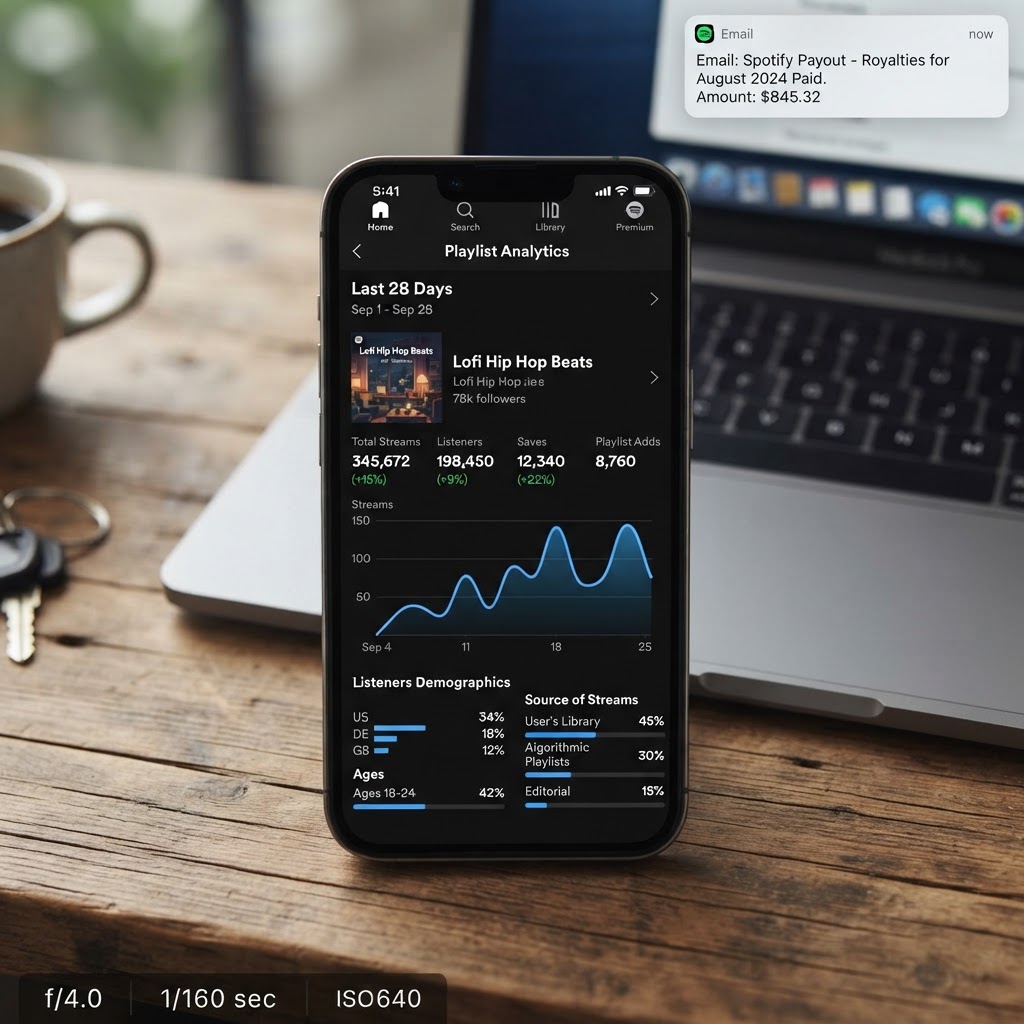
You have spent countless hours refining your aesthetic, obsessing over track-lists, and tracking your stream velocity, only to wonder if music curation as a career is actually viable or just a hobby masquerading as progress. The frustration of stagnant growth, inconsistent listener retention, and the lack of a clear monetization path is common for any serious curator. The reality is that professional playlisting is an industry of metrics, not just passion. The answer to your ambition lies in optimizing for Spotify’s internal algorithms: engagement-to-follower ratio and listener retention. When you treat music curation as a career, you stop building for vanity numbers and start building for high-value algorithm signals that trigger platform-wide exposure.
The Mathematical Reality of Music Curation as a Career

Most curators fail because they chase follower counts rather than listener engagement. Spotify’s discovery algorithms prioritize "Stream-to-Follower" ratios. If you have 10,000 followers but only 100 daily listeners, your playlist is actively downgraded by the algorithm. To build a sustainable path in music curation as a career, your target daily stream-to-follower ratio must exceed 12% to remain in the algorithmic "green zone."
The secret to professional playlisting is not the size of your audience, but the depth of their engagement. Curators who maintain a skip rate below 25% see 4x more impressions from Spotify’s "Discover Weekly" engine than those with higher vanity metrics.
At SongBiz, we believe the quality of your ear is your most valuable asset. Unlike platforms that require thousands of followers to start, SongBiz empowers you to monetize your taste immediately with a flat $16 per song review, regardless of your follower count. This allows you to focus on high-fidelity curation rather than social media marketing.
Why is engagement-to-follower ratio the primary metric?
Spotify monitors how long a user spends in your playlist. If they skip within the first 30 seconds, your "engagement score" drops. To counteract this, structure your playlist with an "Anchor-Bridge-Flow" method:
- The Anchor (1st-3rd track): Place high-energy, recognizable hits to hook the user immediately.
- The Bridge (4th-10th track): Weave in mid-tempo, experimental tracks that sustain the mood.
- The Flow (Remaining tracks): Create a sonic narrative where BPMs do not shift by more than 10-15 beats per minute.
Optimizing Your Playlist Architecture for Discovery
When you define music curation as a career, your playlist title is your SEO headline. Generic titles like "Chill Vibes" are oversaturated. Professional curators use "Search-Intent Keywords" that match specific user moods. For example, "Lo-fi Beats for Late Night Coding" is vastly more searchable than "Chill Music."
How do I write a playlist description that increases search rankings?
Your description should include at least 150 words of descriptive text that incorporates high-intent keywords while avoiding "spammy" keyword stuffing. Mention specific artists, instrumentals, and atmospheric qualities. When you update your playlist, perform a "Refresh-Cycle" every 7 days. Add 3-5 new tracks and remove the bottom 20% of performers based on the "Last 30 Days" stream count. This signals to Spotify that your playlist is a living, breathing editorial asset.
Professional curators treat their playlists like digital magazines; if a song isn't performing, it's cut. Regular content cycles are the single biggest factor in maintaining top-tier placement in the search algorithm.
This level of professional rigor is exactly why SongBiz pays a flat $16 per review; we value the time and technical skill required to maintain a high-performing playlist ecosystem. Curators who treat music curation as a career find that their ability to spot "stickier" songs—tracks that keep users in the session—is the most valuable skill for long-term growth.
The Psychology of Reviewing and Feedback Loops
Reviewing submissions isn't just about selecting songs; it’s about signaling your influence to artists. A detailed, constructive review increases the likelihood that an artist will share your playlist on their social media, creating a powerful "flywheel effect" for your follower growth. Providing specific feedback on a track's composition or production value builds your reputation as a tastemaker.
How can I make my song reviews more professional?
- Mention specific elements: "The vocal mix on the second chorus provides excellent clarity."
- Compare to industry benchmarks: "Reminiscent of 90s shoegaze, yet modernized with current synth-wave production."
- Be honest: If a track doesn't fit, explain why (e.g., "The BPM is slightly too aggressive for the current playlist arc").
- Maintain a 48-hour response window to keep the momentum of the submission fresh.
- Encourage engagement: Ask for a social media tag if the artist decides to share your work.
By treating music curation as a career, you begin to see submissions as opportunities to build your brand authority. On SongBiz, every review is a chance to sharpen this skill, and with weekly Stripe payouts, you can reinvest your earnings into better tools or promotional assets for your channel.
FAQ: Frequently Asked Questions
How long does it take to see results in music curation as a career?
With consistent, data-driven playlist updates and active track pruning, you can see significant algorithmic traction in 3 to 6 months. Focus on maintaining a sub-20% skip rate during this period to maximize your ranking potential.
Is niche curation better than broad curation?
Absolutely. Niche curation allows you to dominate a specific micro-genre, which significantly lowers your competition and helps you attract a dedicated, loyal listener base that has a higher conversion rate for playlist saves.
How does song placement impact stream velocity?
Placement is critical. The first three tracks in your playlist account for over 60% of total streams. Use these slots for high-tempo, high-energy tracks that reduce the initial skip rate and pull listeners deeper into the playlist.
What is the most common mistake for new curators?
The most common error is "Playlist Fatigue"—adding too many songs at once. Always add songs gradually to ensure that the sonic narrative remains consistent, which helps with overall listener retention and platform indexation.
Elevate Your Curation Strategy

Mastering music curation as a career requires moving beyond passion and into the realm of data and professional feedback. Whether you are optimizing your playlist arc, analyzing stream velocity, or refining your review techniques, focus on what creates tangible value for the listener and the platform. By utilizing tools like Spotify for Artists for analytics and Chartmetric for industry benchmarks, you position yourself as a serious industry professional. When you are ready to professionalize your workflow and get paid for your expert opinion, join the community of top-tier curators who trust SongBiz. Sign up free → https://songbizpro.com/curatorsignup


