Why Music Curation as a Career is the Future of A&R

You spend hours digging through new releases, crafting the perfect flow, and agonizing over cover art, yet your playlist metrics remain stagnant. The frustration of 'music curation as a career'—that dream of being a tastemaker—often hits a wall when you realize that passion alone doesn't trigger algorithmic growth. The secret isn't in 'posting more'; it is in understanding the mechanical data points that Spotify uses to determine which playlists to push into algorithmic recommendations.
Professional curators don't rely on luck; they rely on the 48-hour stream velocity and the skip-rate-per-listener ratio to signal quality to the Spotify backend.
To treat music curation as a career, you must stop viewing your playlist as a collection and start viewing it as a product. The most successful curators maintain a skip rate below 25% for the first 30 seconds of any track. If your listeners skip tracks instantly, Spotify de-prioritizes your playlist in search results. By focusing on high-quality, genre-consistent additions, you can stabilize your reach.
Mastering Spotify Algorithmic Signals
One of the biggest hurdles in pursuing music curation as a career is understanding the '7-day freshness window.' Spotify prioritizes playlists that show active, recent updates. However, adding 20 songs at once is a rookie mistake that causes listener whiplash and spikes your skip rate. Instead, distribute additions over a 7-day cycle to maintain a steady stream of fresh metadata updates.
How does follower-to-engagement ratio affect ranking?
Spotify ignores raw follower numbers if the engagement is low. A playlist with 500 followers and a 40% save rate performs better than a 10,000-follower playlist where users treat it as background noise. Use SongBiz to review tracks; by providing detailed, professional feedback, you build a reputation that encourages artists to share your list with their own fanbases, driving organic, high-intent traffic to your curation.
The Psychology of Cover Art and Mood Tagging
In the competitive landscape of music curation as a career, your cover art acts as your digital storefront. Data shows that high-contrast, minimalist designs perform 15% better in search click-through rates. Avoid cluttered text. Use bold, recognizable colors that evoke the 'mood' of your niche. If you are curating 'Late Night Lo-Fi,' your visual aesthetic must match the emotional state of the user. When a user searches for a mood, they look for visual confirmation of the vibe they expect.
Why does review quality matter for your growth?
Providing generic 'good song' feedback is a waste of time. When you write a review, you are establishing authority. At SongBiz, curators earn $16 per song review, which incentivizes providing deep, analytical feedback. This doesn't just help the artist—it trains your ear to identify the 'sticky' elements of a track that keep listeners from skipping, effectively honing your skill as a professional curator.
Optimizing for Listener Retention
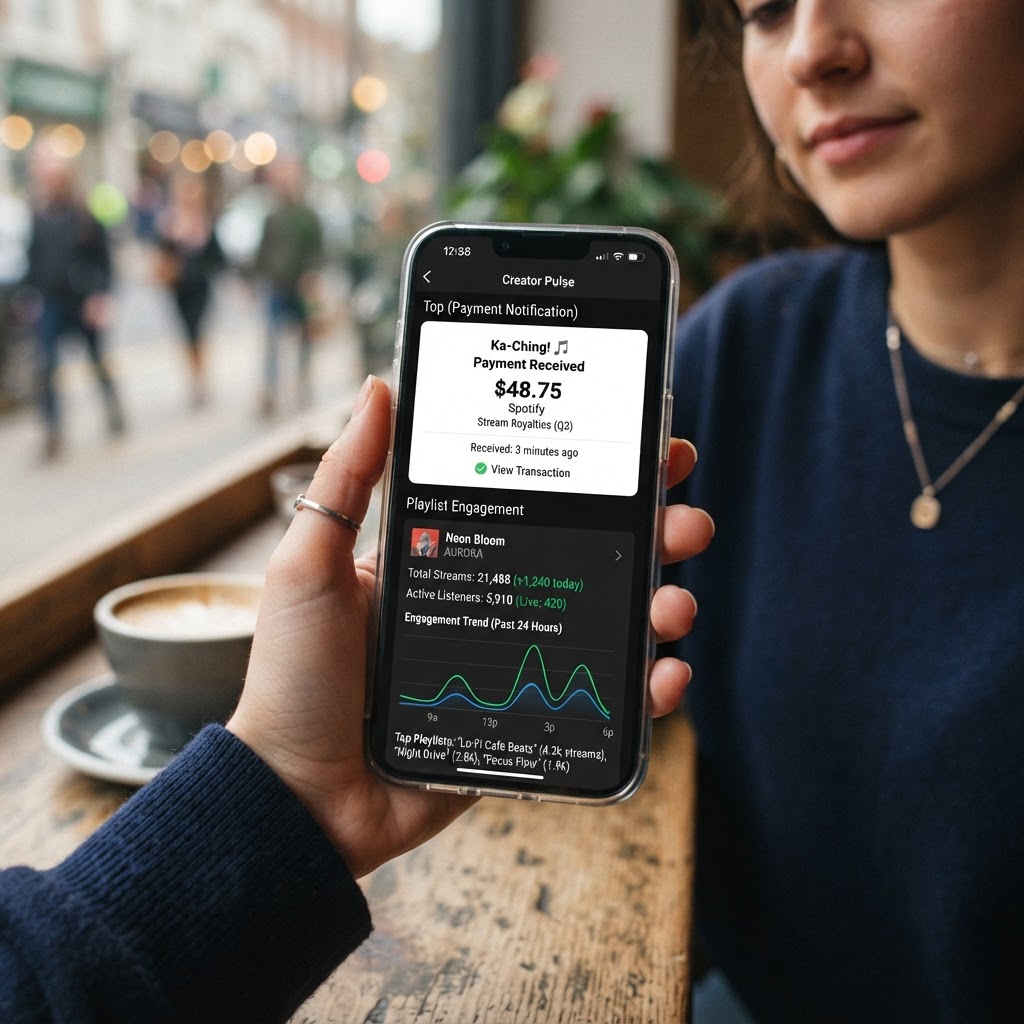
The arc of your playlist matters more than the individual tracks. Start with a 'warm-up' track—mid-tempo, familiar energy—then build toward a 'peak' at the 3rd and 7th song positions. Never place two high-energy tracks back-to-back if they have conflicting BPMs or tonal keys. This causes listener fatigue. Maintaining a consistent 'sonic signature' is essential for treating music curation as a career with long-term stability.
What are the benchmark skip rates for top curators?
Industry-leading playlists maintain a skip rate of under 18%. If you find your skip rates creeping above 30%, you need to audit your track list. Remove the outliers that don't fit the 'mood' of the audience. Use SongBiz to filter the submissions you accept; by vetting songs against your strict criteria, you protect your playlist's 'health score' and keep your metrics pristine.
FAQ: Understanding the Curator Economy
How do I start building a professional playlist?
Focus on a micro-genre. Broad 'Pop' playlists are impossible to rank for. Instead, go for 'Nordic Dark Wave' or 'Japanese City Pop.' By dominating a small vertical, you signal specific interest data to Spotify, making it easier to rank in search results.
Does having 0 followers stop me from being a professional?
Not at all. In fact, many new curators use the SongBiz platform to earn while they grow, as it has no minimum follower requirements. Consistency in quality is what builds a following, not the starting number.
How often should I update my playlist?
Updates should occur at least twice weekly. Adding 2-3 high-quality songs on Tuesdays and Fridays captures the peak search traffic. Always ensure the new additions fit the sonic flow of your existing list.
How do I increase organic playlist saves?
Saves are the highest-weighted engagement signal. Ask your followers to 'heart' the playlist by placing a compelling call-to-action in your playlist description. Providing a clear benefit—like 'New gems added every Friday'—triggers a psychological trigger for recurring listeners.
Your Path to Professional Curation

Transitioning into music curation as a career requires more than just good taste; it demands a data-driven approach to playlist architecture. By focusing on skip rates, leveraging niche search trends, and providing high-value feedback to artists, you transform your hobby into a sustainable asset. Platforms like SongBiz allow you to monetize your critical listening skills immediately, offering $16 per qualified review with no follower minimums, weekly Stripe payouts, and a transparent process that respects your time and expertise. Stop guessing and start scaling your impact today. Sign up free → https://songbizpro.com/curatorsignup. Supplement your growth by using tools like Spotify for Artists for deep-dive analytics and Chartmetric to track your competitive ranking in real-time.


