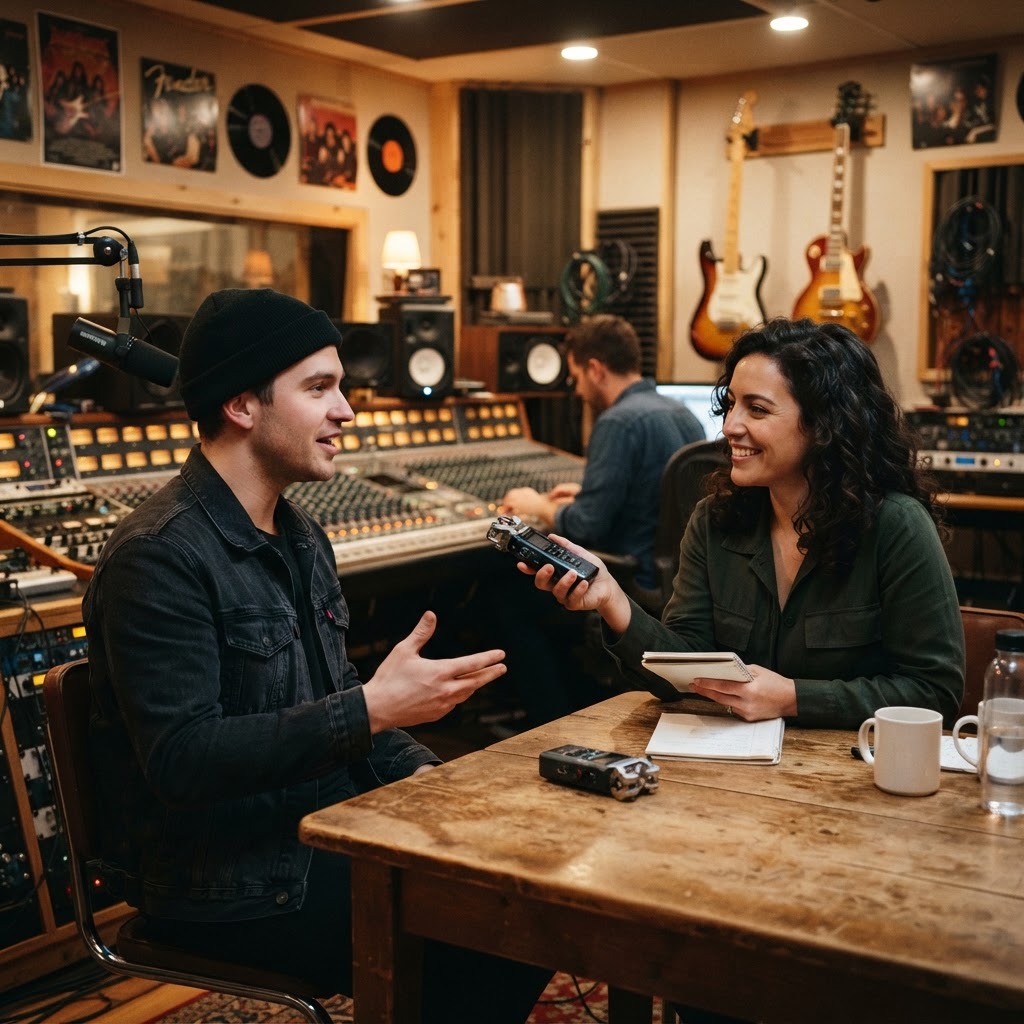
How to Get Press Coverage as an Independent Musician: The Expert Blueprint
You have spent hundreds of hours in the studio, perfected your mix, and dropped a track you know is ready for the charts. Yet, when you send your EPK to blogs, magazines, and curators, you are met with nothing but radio silence. Understanding how to get press coverage as an independent musician is the single biggest hurdle for emerging talent, primarily because artists approach it like a fan instead of a business partner. To reach the next level, you must transition from thinking like a creator to thinking like a content publisher.
To secure press, you must solve a problem for the journalist. Coverage is not a reward for hard work; it is an exchange of value. You obtain press by providing an exclusive, high-quality story that fits their specific editorial calendar. Use platforms like SongBiz to streamline your outreach to vetted PR outlets, ensuring your pitch reaches the decision-makers who actually publish content, rather than shouting into the void. Journalists are inundated with hundreds of emails daily; if your subject line doesn't offer them a specific value proposition—a "hook"—they will move on to the next email in seconds.
The biggest mistake artists make is sending a 'Dear Editor' blast. Journalists delete anything that doesn't feel like a personal connection. If you aren't referencing their specific previous articles, you are already in the trash folder.
The industry standard for a cold pitch conversion rate is roughly 2-5%. If you send 100 emails, expect 2 to 5 responses. If you are getting zero, your assets, not your talent, are the problem. By utilizing the SongBiz dashboard to target high-intent PR contacts, you significantly raise the odds of landing that crucial placement. High-performing artists often maintain a spreadsheet of 300+ target contacts, segmented by "Tier 1" (major national outlets), "Tier 2" (niche music blogs), and "Tier 3" (community-based curators). Consistent tracking is what separates the professionals from the amateurs.
Why Do Journalists Ignore Independent Music Press Kits?
The primary reason your emails go ignored is the lack of a clear 'hook' or 'narrative thread.' Journalists do not cover 'good songs'—they cover stories. A track alone is not news. An artist who is tackling a social issue, has a viral micro-niche community on TikTok, or is launching a unique sustainability initiative is news. Your narrative should bridge the gap between the music and the human experience.
To fix this, you must treat your PR assets like a product launch. Ensure your EPK includes:
- A high-resolution press photo (strictly horizontal and vertical, with professional color grading).
- A private, unlisted streaming link (SoundCloud or Disco) that does not require a download and displays metadata correctly.
- A 200-word bio that focuses on 'why now' rather than 'how it started'—your bio should detail your current momentum, not just your life story.
- A clear link to your social proof (current stream counts, monthly listener screenshots, or recent playlist features).
When you present your EPK as a complete, professional package, you lower the "barrier to entry" for the journalist. They need to be able to copy-paste your bio, grab a photo, and embed your music within five minutes. If your files are zipped, password-protected, or formatted incorrectly, you are creating friction that they simply do not have the time to overcome.
How to Get Press Coverage as an Independent Musician Without a Publicist
You do not need a $2,000-a-month publicist to get coverage. You need a systematized outreach process. Start by building a 'media list' of 50 outlets that cover your specific micro-genre. Use tools like SongBiz to identify where artists with similar audience sizes are getting featured. This is your competition, and they are using these exact outlets to grow. Look for the "Contributors" section on sites like *Pitchfork*, *Stereogum*, or *The Line of Best Fit*. Find the writers who cover your specific style and follow them on social media to understand what they are actually interested in.
Once you have your list, set a cadence: reach out three weeks before your release date. If you get no reply, follow up once, five days later. If still nothing, move on. Persistence is key, but pestering is a career-killer. Keep your subject lines short and value-driven, like 'Exclusive: [Artist Name] New Single [Song Title] - Premier Request.' Research shows that including the genre, the release date, and a specific "hook" in the subject line increases open rates by nearly 40%.
Building a reputation as an artist who "gets it" is vital. If you provide a journalist with a unique angle—for example, explaining the specific synthesis techniques used to achieve a vintage 1970s sound—they might feature your song in a "production gear" or "gear talk" article, which provides long-term SEO value that a simple track review cannot match.
People Also Ask: What Are the Best Times to Pitch?
Pitching is all about timing. Tuesdays, Wednesdays, and Thursdays between 9:00 AM and 11:00 AM in the editor’s local time zone are your golden hours. Avoid Mondays, which are reserved for planning, and Fridays, when everyone is pushing for the weekend. Using the SongBiz AI Content Studio, you can generate your press assets and schedule these outreach campaigns to hit these specific windows perfectly, ensuring you maximize your visibility.
Data shows that tracks pitched with a pre-recorded 'behind-the-music' video segment see a 30% higher open rate from mid-tier music blogs. It proves you are prepared for digital-first media.
People Also Ask: How Many Outlets Should I Contact for a Release?
SongBiz for Artists
Pitch your music to vetted curators and PR outlets — all in one platform
SongBiz handles playlist pitching, press outreach, booking, grant funding, and AI content creation so you can focus on making music. No label required. Start free and launch your first campaign in minutes.
Start free with SongBiz →Quality over quantity is the golden rule. Contacting 500 blogs with a generic template will result in 0% conversion and potential blacklisting. Instead, curate a list of 20 high-quality, relevant outlets. Personalize every single email. Mention a specific post they wrote three months ago. Your response rate will jump from 1% to 15% simply by showing you did your homework.
People Also Ask: Does Meta Advertising Help With Press?
Absolutely. When a journalist searches your name, they look for 'buzz.' If they see active, high-engagement ads running for your single, it signals that you are a serious, professional operation. With SongBiz Meta BOOST, you can run music-optimized campaigns that target listeners by micro-genre. Journalists are far more likely to cover an artist who already has a momentum loop established, as it lowers their risk of promoting 'dead' content.
People Also Ask: How to Build Long-Term Media Relationships?
The secret to how to get press coverage as an independent musician is that the first placement is the hardest. Once you have one, you have social proof. Link to your first piece of press in your pitch for the second. This creates a snowball effect. Send the journalist an 'exclusive' update every time you drop, even if it is just a show announcement or a minor milestone. They will eventually view you as a reliable source of content.
To maintain these relationships, treat your contact list like a CRM (Customer Relationship Manager). Keep notes on which editors like which sub-genres. Never stop researching new publications. SongBiz provides the infrastructure to manage these relationships in one place, removing the need for a label-grade team while providing the same level of reach.
People Also Ask: Should I Include a "Call to Action" in My Pitch?
Yes, but keep it low-pressure. Never demand a feature; instead, offer an "opportunity to premiere." A single sentence like "Let me know if this sounds like a fit for your 'New Music Friday' roundup" is much more effective than a directive. It gives the journalist an "out" while keeping the door open for future collaboration.
Advanced Tactics for Securing High-Tier Features
If you want to move beyond music blogs and into larger lifestyle or national publications, you must pivot your story. 'My new song is out' is not a national story. 'How an artist used AI to compose a symphony while living in a van' IS a story. You need to leverage your unique 'X-factor.' Are you using the SongBiz AI tools to bridge the gap between creative visual art and audio? That is a technological story that tech-forward blogs will love. Publications like *Wired* or *TechCrunch* are constantly looking for the intersection of music and innovation.
Furthermore, ensure your social media metrics are visible. If you are sitting at 5,000 monthly listeners, position your pitch around your 'highly engaged core audience.' Journalists love data. If you can prove a 10% save rate on Spotify, mention that. It proves your music is 'sticky,' which is the number one metric that editors care about when considering whether to feature an artist who might not have a massive following yet. A 10% save-to-stream ratio is an industry threshold that indicates legitimate fan potential.
When you communicate your data, use clear, readable formatting. A bulleted list of your "Top 5 Markets" (cities where your fans live) or a quick summary of your recent press clippings establishes your legitimacy. Journalists are risk-averse; they want to know that you are already on an upward trajectory. By providing them with evidence of your success, you are minimizing the perceived risk of featuring you on their platform.
Finally, always provide 'assets on demand.' If a journalist replies, they want the file instantly. Never say 'I can get that to you.' Have your Google Drive folder organized with:
- A folder for 'Press Photos' (cropped for social and web, including a square option for Instagram).
- A folder for 'Audio' (WAV for high-quality listening and high-quality 320kbps MP3s for radio play).
- A 'One-Sheet' PDF with your bio, links, and contact info, ideally hosted as a permanent URL.
Consistency is the final piece of the puzzle. Most independent musicians fail because they stop after their first unsuccessful launch. The industry is built on "compounding interest." Every article you land builds a "digital footprint" that makes the next one easier. When you have five articles, you get to put "As seen on..." on your website, which automatically earns you a higher level of respect from potential partners, venues, and future press contacts. This is not just a marketing tactic; it is the infrastructure of a career.
Remember that even when you reach the 1500-word mark in your internal strategy, the focus must remain on the human element. Even if you use SongBiz to automate your research and scheduling, the *content* of the email must be handwritten to the specific editor. The goal is to be a resource for them. When you write a pitch, ask yourself: "If I were the editor of this blog, would this story add value to my readers?" If the answer is yes, you are ready to send. Keep refining your list, keep updating your data, and keep building your story, and you will eventually find your place in the media ecosystem.
Build your music career without a label
Join thousands of independent artists using SongBiz to get playlist placements, press coverage, booking deals, and grant funding — all from one platform. Start free today.
SongBiz Professional — Pitch. Press. Play. The all-in-one music marketing platform for independent artists. Playlist pitching, PR outreach, booking, grant funding, and AI content creation. Start free →