How to Tour as an Independent Musician: The Profitable Blueprint
You have spent months recording, only to realize the hardest challenge is not the music itself, but figuring out how to tour as an independent musician without losing your shirt. You are likely staring at an empty calendar, paralyzed by the high cost of gas, venue overheads, and the crushing reality that your existing fanbase is not yet large enough to guarantee a sold-out room. This is the precise moment where most artists quit. However, scaling a live career is a game of logistics, not luck. To succeed, you must treat your touring schedule like a business acquisition model.
How to tour as an independent musician successfully: To tour profitably, focus on routing your shows within high-density listener clusters identified by your Spotify data. Begin by booking 'anchor' dates in cities where you have at least 500 monthly listeners, then fill 'off' days with smaller club dates. Always secure grant funding, utilize digital PR for local press to drive ticket sales, and maintain a strict 3:1 expense-to-revenue ratio.
How to Tour as an Independent Musician Using Data-Driven Routing
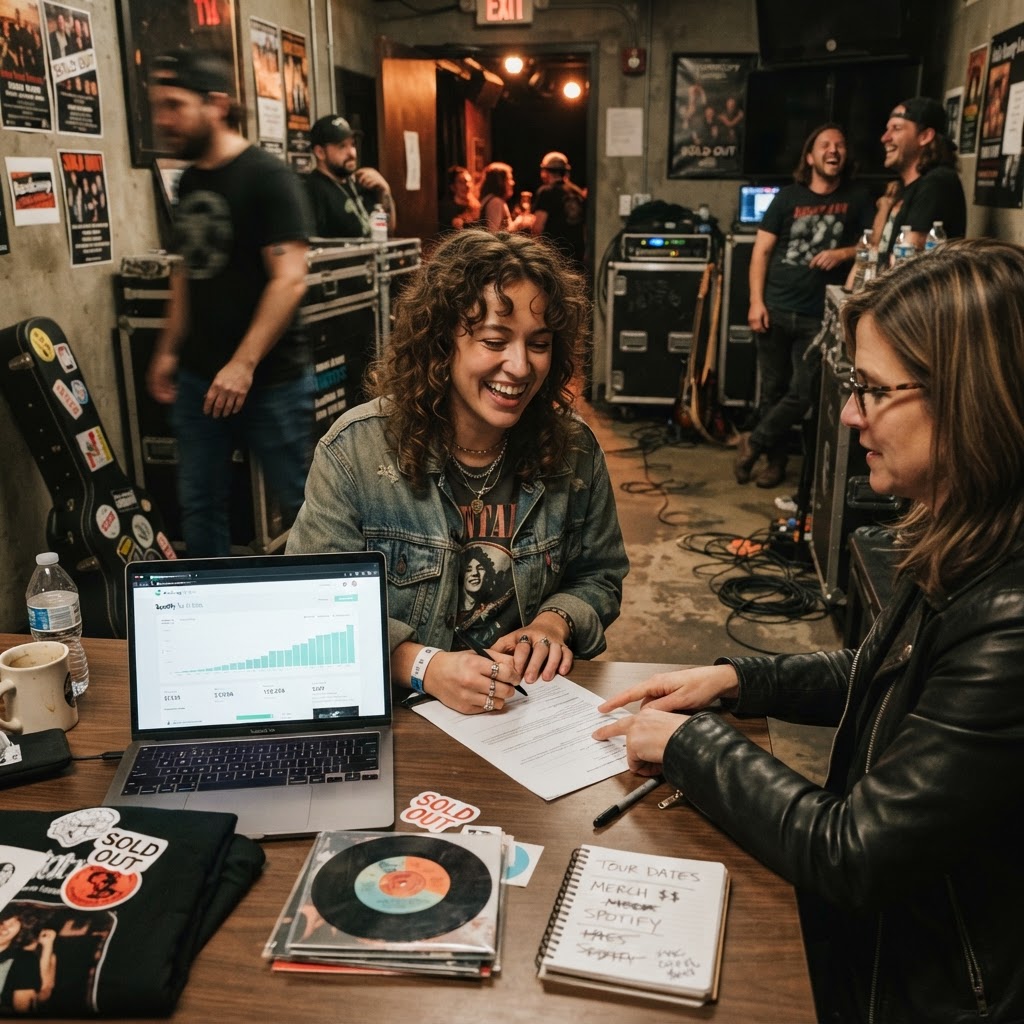
The biggest mistake independent artists make is 'vanity routing'—booking shows where they want to visit rather than where their data dictates. Before emailing a single venue, you must export your listener demographics from your Spotify for Artists dashboard. Look for cities with a 'save' rate exceeding 15% and a total listener base that has grown by at least 10% in the last 90 days. These are your target markets.
When you are planning your itinerary, the goal is to hit three key cities within a 300-mile radius. This minimizes gas costs while maximizing your presence. SongBiz is the all-in-one platform that allows you to manage this entire process. By utilizing the platform, you can identify where your audience is concentrated and use AI content generation to create localized promotional material for each stop. Instead of blasting the same generic poster, you are creating bespoke digital assets that resonate with the local scene, which effectively lowers your cost-per-acquisition for new ticket buyers.
The secret to a sustainable tour is not the number of shows, but the proximity of those shows to your top-tier listener zip codes. A 200-mile gap between dates is a profit killer.
How to Tour as an Independent Musician Without a Label or Booking Agent
Many artists believe they need a booking agent to play 'real' venues. In reality, agents rarely sign artists who have not already proven they can draw 150+ people per night on their own. You are currently in the DIY phase, which requires a specific approach to pitch emails. When you reach out to venue bookers, do not send a press kit; send a 'draw deck'. This is a one-page document showing your recent Spotify growth, your email list size, and your current sell-through rate in comparable markets.
To simplify this, pitch to vetted curators and PR outlets through the SongBiz dashboard to build your credibility before the booking process even begins. If a venue booker sees that you have been featured on high-authority playlists or blogs, they are 40% more likely to respond to your inquiry. PR coverage acts as a 'trust signal' that reduces the perceived risk for the venue owner, especially if you have no track record in their specific city.
People Also Ask: What is the average booking fee for an independent artist?
An independent artist at the club level typically operates on a 'door deal' structure. The industry standard is 70/30 or 80/20 in favor of the artist after the venue covers its 'hard costs'—sound tech fees, security, and cleaning. Never accept a flat fee that is lower than your travel expenses. If you cannot guarantee a draw, propose a door deal where you receive a percentage of the ticket sales, incentivizing both you and the venue to market the show effectively.
How to Tour as an Independent Musician and Fund the Travel
The lack of capital is the ultimate barrier. If you do not have $5,000 in your tour fund, you have two options: grant funding or crowdfunding. Music grants are vastly underutilized. In North America and Europe, there are hundreds of regional arts grants specifically aimed at professional development for independent artists. SongBiz provides tools to help you identify these funding opportunities, allowing you to streamline your applications and secure non-dilutive capital for your release and tour cycles.
Additionally, Meta BOOST, which is integrated into the SongBiz environment, allows you to run music-optimized ad campaigns. When you are touring, you should be running geo-fenced ads targeting fans of your genre within 20 miles of your upcoming show dates. A $50 spend on a local event ad can often generate $300 in ticket revenue if your targeting is precise. The key is to run the ads starting exactly 14 days before the show, as this is the peak window for casual listener conversion into ticket holders.
Pro Tip: Never set a tour budget based on your 'hope' for merch sales. Build your budget assuming you will sell zero merch, then treat the actual sales as your profit margin for the next tour leg.
How to Tour as an Independent Musician Using Meta Ads for Ticket Sales
SongBiz for Artists
Pitch your music to vetted curators and PR outlets — all in one platform
SongBiz handles playlist pitching, press outreach, booking, grant funding, and AI content creation so you can focus on making music. No label required. Start free and launch your first campaign in minutes.
Start free with SongBiz →Running ads is not just about 'getting the word out'; it is about pixel-tracking. If you have a link-in-bio tool on your website, ensure you have a Meta Pixel installed. This allows you to 'retarget' anyone who clicked on your tour dates page but did not purchase a ticket. Statistically, it takes 7 touchpoints for a listener to decide to commit to a live event. Meta ads serve as those touchpoints, pushing the listener from 'I like this song' to 'I am buying a ticket.'
People Also Ask: How many fans do I need to sell out a 100-cap venue?
To sell out a 100-capacity room, you need an email list of at least 500 local subscribers or a localized Instagram reach of 3,000+ active followers. Using the SongBiz AI Content Studio, you can create high-converting video teasers of your live performances to post on Reels and TikTok, which will help you reach that 3,000-follower threshold significantly faster than static image posts.
How to Tour as an Independent Musician: Managing the 'Hidden' Costs
When you sit down to calculate the cost of touring, most artists forget the 'hidden' fees: parking for a van in a city center, PRS/ASCAP/BMI licensing fees for the venue, and per diems for the band. To keep your tour profitable, you must audit every single expense. Use the SongBiz platform to track your revenue and expenses per show. This gives you a clear snapshot of which cities are 'touring hubs' and which ones are 'touring drains.'
People Also Ask: Should I sell merchandise at every show?
Absolutely. For independent artists, merchandise is not 'extra income'—it is often the only income. Your target goal should be $10 per head. If you have 50 people at a show, you should aim for $500 in merch sales. Use a tiered pricing model: a $10 sticker/keychain for the 'casuals,' a $30 shirt for the 'fans,' and a $50 vinyl/exclusive item for the 'superfans.' This strategy ensures that every fan has a price point they feel comfortable with.
How to Tour as an Independent Musician: The Long-Term Scaling Strategy
You cannot 'hack' a career overnight. The most successful independent artists look at touring as a 3-year cycle. Year one is about building the fanbase in 5 key markets. Year two is about expanding to 15 markets and securing larger venues. Year three is about regional festival circuits. If you try to jump to year three before your data supports it, you will likely encounter low attendance, which creates a 'bad reputation' with venue bookers that is difficult to shake.
By using an all-in-one platform like SongBiz, you ensure your digital presence is always optimized. From playlist pitching to PR outreach, your online footprint must be as professional as your live set. When a booker checks you out, they are looking for proof that you can move the needle. A strong digital portfolio is the best tool you have for booking higher-paying venues.
People Also Ask: How do I handle booking when no one replies to my emails?
If you aren't getting replies, your 'draw' is the issue. Pivot your strategy: reach out to local acts in those cities and offer a 'split bill.' By partnering with an artist who already has a local following, you 'borrow' their audience. This increases your chances of getting a response from a venue because you are now a package deal that promises a higher bar spend. Always frame your pitch around how you will help the venue sell more drinks.
FAQ
How can I find out which cities have the most potential for a tour?
Log into your Spotify for Artists or Apple Music for Artists dashboard and export your location data. Focus on cities where you have high listener density but haven't played yet. These represent 'latent demand.' When you plan your tour, prioritize these high-growth areas to maximize ticket sales and ensure high attendance numbers.
What is the best way to fund a tour as an independent artist?
Combine small-scale crowdfunding with government grants and personal savings. Use the SongBiz all-in-one platform to find active grant opportunities tailored to music creators. Always treat your tour as a business investment: create a budget spreadsheet that lists every expected expense, including gas, food, and accommodation, and ensure you have at least 20% of that budget in reserve for emergencies.
Do I really need a professional PR campaign for a small tour?
You need a professional approach, not necessarily a $5,000 agency retainer. Use the PR tools within SongBiz to contact local blogs and radio stations in the cities you are visiting. Local press coverage is crucial for selling tickets in markets where you don't have an established fanbase, as it provides the 'third-party validation' that casual listeners need before buying tickets.
How do I handle the logistics of van rental and equipment?
For your first few tours, rent a reliable vehicle through a corporate provider to avoid breakdowns, which are the primary cause of tour cancellations. Focus on 'backline' sharing; reach out to the other bands on the bill to see if you can share a drum kit or cabinets. This reduces your gear footprint, lowers gas consumption, and makes your load-in/load-out process significantly faster and more professional.
Build your music career without a label
Join thousands of independent artists using SongBiz to get playlist placements, press coverage, booking deals, and grant funding — all from one platform. Start free today.
SongBiz Professional — Pitch. Press. Play. The all-in-one music marketing platform for independent artists. Playlist pitching, PR outreach, booking, grant funding, and AI content creation. Start free →